Începe școala, părinți!!!
2 hours ago


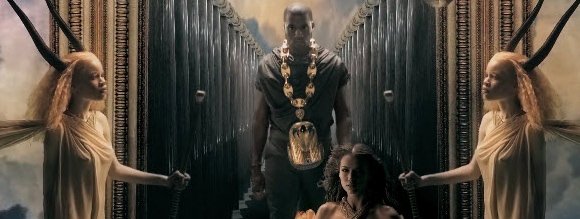
Kanye West’s “Power” is a short, almost stationary video that manages to tell a profound story in symbolic language. By decoding the occult meaning of the symbols present in this moving tableau, the viewer discovers who really holds the “power” in the world and understands the story of Kanye West’s initiation. We will look at the meaning of those symbols as they appear in the video.
Rapper and producer Kanye West has always found a way to stand out from the crowd. His video Power is no exception. It differs from the MTV norm in many regards, whether you look at the content or the form.
The duration of the video, the filming style and the subject matter are quite distinct from today’s typical rap videos as it is short (1:43), filmed in a single shot (compared to the one-shot-per-second standard of music videos) and is very rich in archetypal symbolism.
Director Marco Brambilla sought to depict the concept of power in the form of a “video tableau”, a moving painting that slowly reveals itself to the viewer with a continuous camera movement. The director seem to have perfected this technique in his previous creation, Civilization, a video mural created for the new Standard Hotel in New-York city. The symbolism present there is simply overwhelming. Here it is:
For Power, Brambilla went for a neo-classic aesthetic, but still created a piece full of symbolic and cultural references. As it was the case for paintings of the neo-classic era, each object, each symbol and each detail in the video conveys an important meaning, a meaning that is needed to understand the entire story.
As we will see later, many symbols in the video have a deep occult meaning and many of them point to Freemasonry and Mystery schools. By doing so, the director clearly states what type of power is being presented in the video. We will therefore look at the meaning of the symbols displayed in the video as they appear in the shot. If you haven’t seen it, here it is:
The video starts off with a close-up of Kanye West with glow-in-the-dark eyes, as if he was “illuminated” from within. He stands between an infinite row of Ionic columns, which represent “wisdom” in Masonic symbolism.
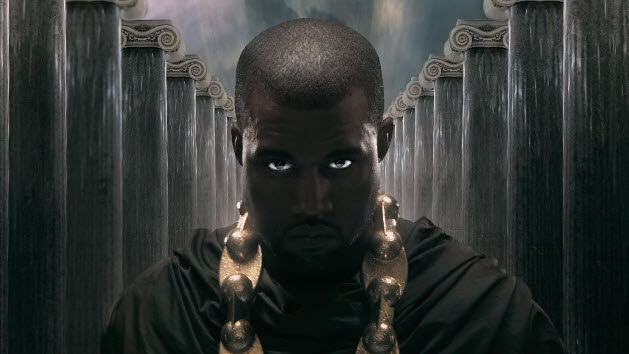
As regular readers of this site already know, the occult meaning of the twin pillars is ancient, profound and present in the symbolism of almost all mystery schools of History. There are many layers of interpretation attributed to the two columns, but one constant is always present: The pillars represent the entrance – the gateway – to the world of the initiate. Behind the columns can be found the key to the Mysteries and, consequently, the source of true power. This concept has been used for in many cultures and schools of thought.
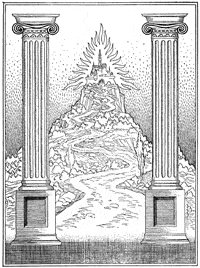
“The city of the philosophic elect rises from the highest mountain peak of the earth, and here the gods of the wise dwell together in everlasting felicity. In the foreground are the symbolic pillars of Hercules which appear on the title page of Bacon’s Novum Organum, and between them runs the path which leads upward from the uncertainties of earth to that perfect order which is established in the sphere of the enlightened. “
- Manly P. Hall
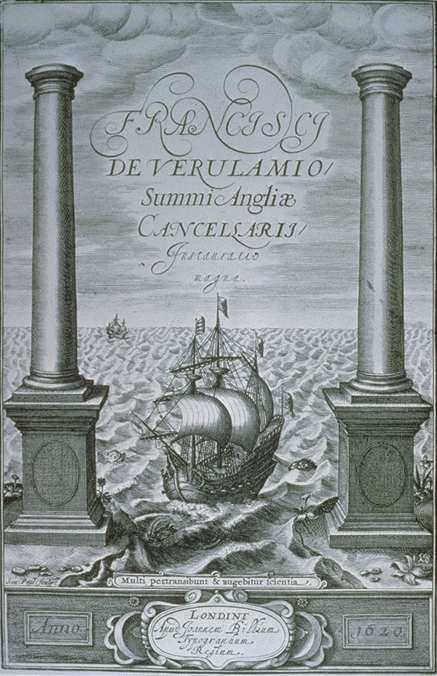
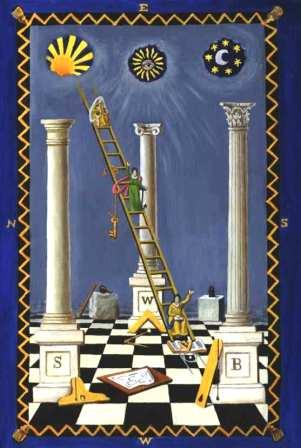

In Power, Kanye is standing at the mouth of the gateway to the “sphere of the enlightened,” right at the border of the corrupt and decadent material world. So, right from the start of the video, the director reveals the true nature of power in this world: It is not your democratically elected officials, but those who consider themselves to be behind those pillars. One of the most significant lines of the song is
“In this white man’s world, we the ones chosen”
Does Kanye’s “white man’s world” refer to the hidden rulers, the Illuminati, who are hidden behind those pillars? Did they choose Kanye West and give him Power by permitting him to become an influential figure in the entertainment industry? Was he chosen to become one of them? The next symbol might shed some light into this.

The next thing that catches the viewer’s eye is most probably that gigantic chain with Horus’ head as a pendant. Horus is an ancient Egyptian deity that has an extreme importance in occult mysteries. Considered to be the Sky god, he is more often represented with the symbol of a single eye. The Eye of Horus is an ancient Egyptian symbol of protection and royal power from deities, in this case from Horus or Ra
.
“Horus, the son of Osiris and Isis, was called “Horus who rules with two eyes.” His right eye was white representing the sun while his left eye was black representing the moon. According to Egyptian legend Horus lost his left eye during a fight with his murderous uncle, Seth, to revenged his father’s death.
Seth tore out his nephew’s eye but lost the fight because the assembly of the gods declared Horus the victor. The eye was reassembled by the magic of Thoth. Then Horus gave the eye to Osiris who experienced rebirth in the underworld.”
- Jordan Michael, Encyclopedia of Gods

The importance of the “one-eye” in occult symbolism has been highlighted in many articles on The Vigilant Citizen. The All-Seeing Eye found on the Great Seal of the United States and many other occult symbols originate from the Eye of Horus.
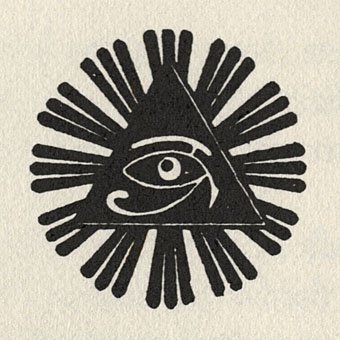
The symbolism of Horus is especially of great importance in Freemasonry, as the path of an initiate through the Masonic degrees is described as the process by which the Eye of Horus is opened.
So Kanye stands at the gateway between the corrupt world of the profane and the exclusive world of the illuminated, wearing a Horus pendant, an unmistakable symbol of the Mysteries. One might say: “Well maybe Kanye just likes Egyptian things.” Maybe so, but in the context of this video, where all details are important and extremely meaningful, Horus becomes another piece of this symbolic puzzle.
The entrance of the gateway of pillars is guarded by two horned albino girls holding a staff. Their features are very reminiscent of depictions of Isis and Hathor, goddesses of ancient Egypt. Another allusion to Egyptian magic.
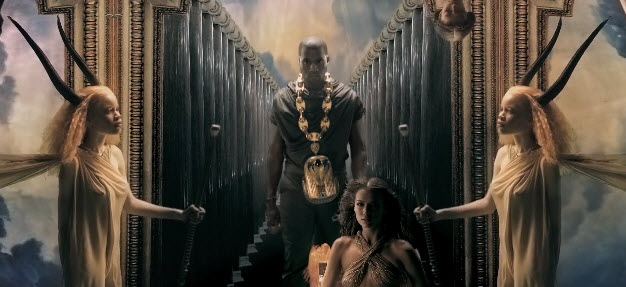

Isis was the mother of Horus (discussed above) and was the goddess of motherhood, nature and magic. Hathor was also considered as a maternal deity while also being the goddess of music, dance and fertility. Both Isis and Hathor were known to welcome and protect the dead during their journey to the afterlife, a concept that is particularly interesting in the context of the video.
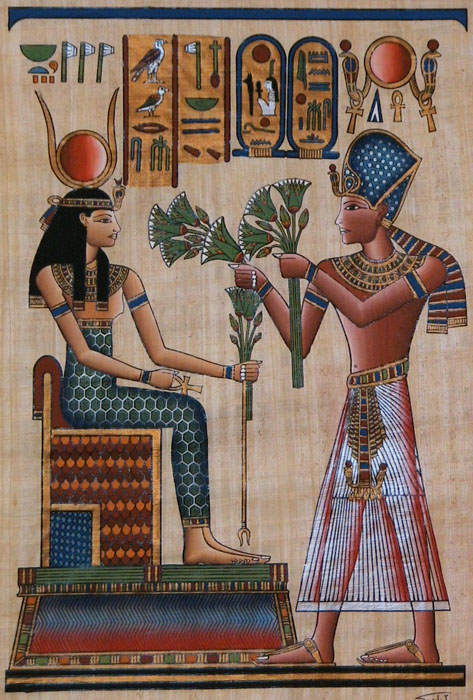
“The goddess (Hathor) [...] manifests two aspects of her divine power: first of all, she participates in the afterlife rite of passage, by means of which the deceased attains eternal life, and, second, she demonstrates her special connection to the Egyptian king. Hathor is rightly called a royal goddess, and in this role she is linked in various ways to the life of the pharaoh. Often the pharaoh would call himself the oldest son of Hathor.”
- Archive for Research in Archetypal Symbolism
Kanye, perhaps symbolizing the Pharaoh, is standing at the gateway to eternal wisdom, about to be executed/assassinated/sacrificed under the watchful eyes of Hathor, the “royal goddess.” Are the goddesses welcoming Kanye “behind the veil,” protecting him in this rite of passage to immortality?
In occult circles, new candidates must symbolically die and be reborn to complete their initiation process. Is Kanye being killed an allegory for his initiation?
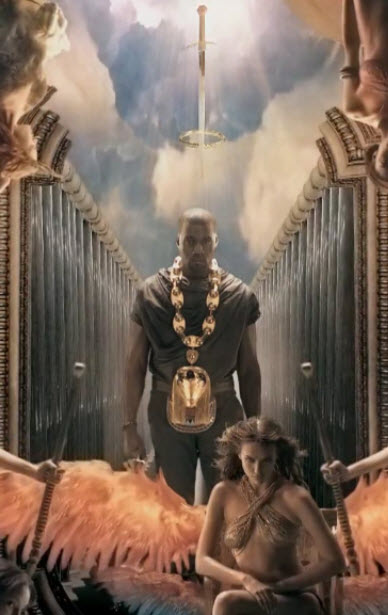
While doing some preliminary research on this video, I came across an article on MTV.com titled Kanye West’s ‘Power’ Video: A Cultural Cheat Sheet. Here’s what it says about the sword hanging above his head:
“Dragonlance: An image of a sword descending into a crown hovers over Kanye’s head, bringing to mind Volume Two of Douglas Niles’ series “The Crown and the Sword: The Rise of Solamnia,” in which Sir Jaymes Markham commands the orders of the Rose, Sword and Crown.”
- Kanye West’s ‘Power’ Video: A Cultural Cheat Sheet, MTV.com
Really? The director of this neo-classical themed video, was inspired by an obscure fantasy novel released in, like, 2006? Seriously? Good job, MTV, in keeping our youth clueless. The descending sword is more probably a reference to the Sword of Damocles, a pretty widely known legend.

“The Damocles of the anecdote was an obsequious courtier in the court of Dionysius II of Syracuse, a fourth century BC tyrant of Syracuse. Damocles exclaimed that, as a great man of power and authority, Dionysius was truly fortunate.
Dionysius offered to switch places with him for a day, so he could taste first hand that fortune. In the evening a banquet was held where Damocles very much enjoyed being waited upon like a king. Only at the end of the meal did he look up and notice a sharpened sword hanging directly above his head by a single horse-hair.
Immediately, he lost all taste for the fine foods and beautiful girls and asked leave of the tyrant, saying he no longer wanted to be so fortunate.
Dionysius had successfully conveyed a sense of the constant fear in which the great man lives. Cicero uses this story as the last in a series of contrasting examples for reaching the conclusion he had been moving towards in this fifth Disputation, in which the theme is that virtue is sufficient for living a happy life.
Cicero asks “Does not Dionysius seem to have made it sufficiently clear that there can be nothing happy for the person over whom some fear always looms?”
The tale of the Sword epitomizes the constant danger faced by those in positions of power. Kanye stands there, in a state of impending doom, knowing he can be executed at any time. Right after we see the sword of Damocles, a figure appears holding a dagger and attempting to stab him.
The assassination will not happen by dagger, however, as two other figures leap out of nowhere holding swords to accomplish the “Killing of the King.”
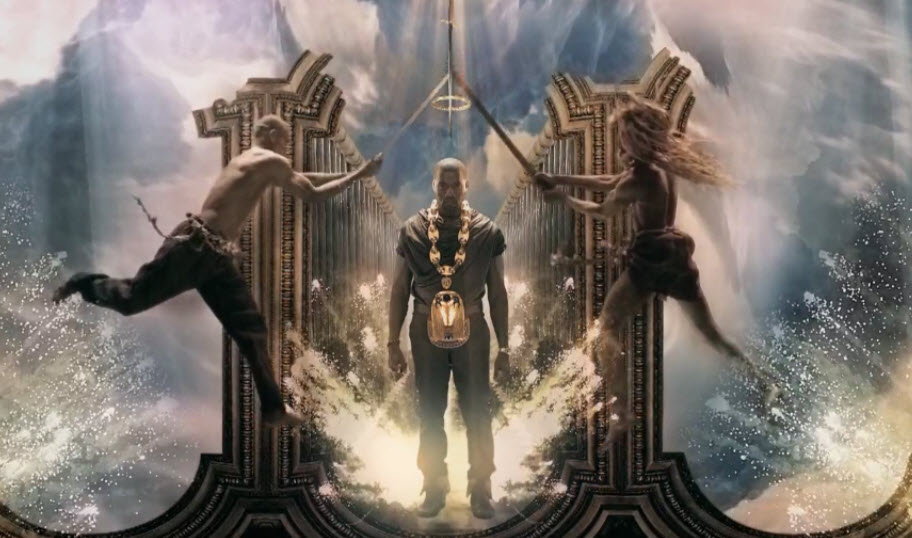 Ritual initiation represented in a display of geometry and symmetry
At the ending of the video, the decadent women and the dagger-holding assassins all disappear as two swords are about to hit him. Are we sacrificing the King?
The concept of regicide is reflected in the single’s cover art. It depicts Kanye’s severed, crowned head with a sword firmly jammed into it. Apparently Kanye was king and he got killed. Is this a symbol for a Masonic ritual? Note the stone on which Kanye’s head is placed. Is it the “perfect ashlar” of the Masons that represents the state of a perfected initiate?
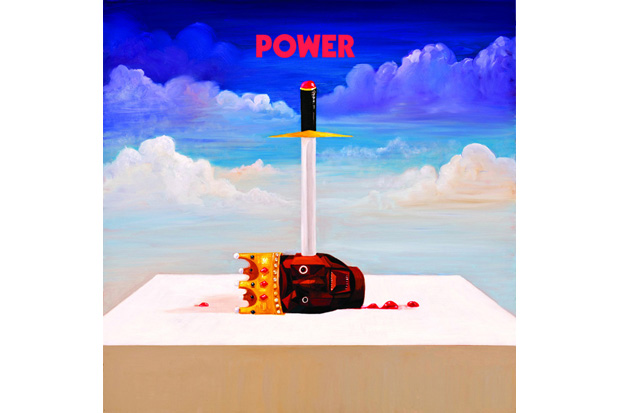
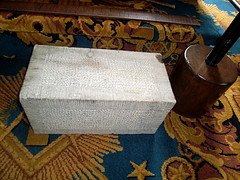
Some occult researchers have stated that the “Killing of the King” is the name of a Masonic rite of passage to obtain the 33rd degree (see “King Kill 33″ by James Shelby Downard & Michael A. Hoffman II). Semi-interesting sidenote: King Kill 33 is also the name of a Marilyn Mason song, with rather interesting lyrics.
Another sidenote: Researchers have reported that Killing of the King rites often happens in public, as more witnesses give more power to the ritual, hence … JFK. A completely crazy theory?… DYR (Do your research).
Back to Kanye and his standing … the two swords flying towards him never actually touch him but instead form a triangular shape above his head, possibly hinting to a “symbolic” killing and not an actual one. Notice the position of the crown above Kanye’s head. The combination of those elements form an interesting image.
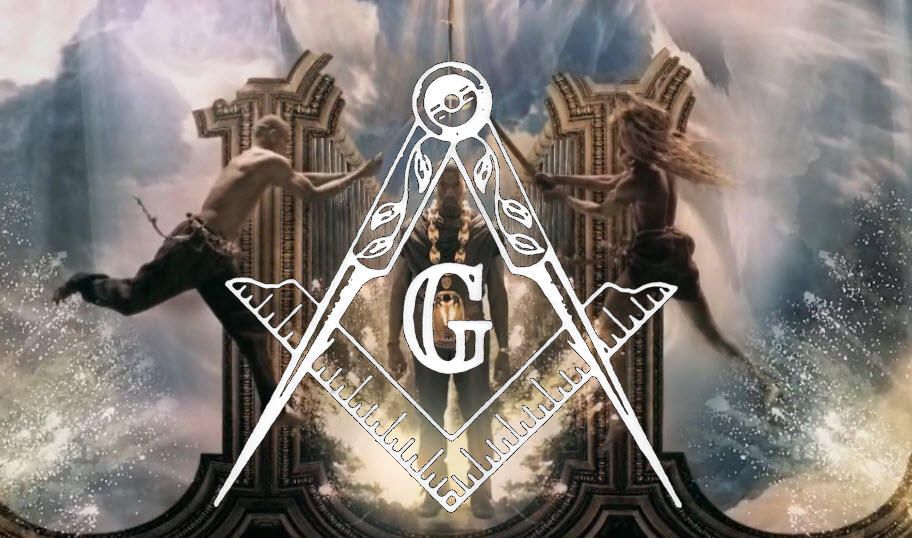
To sum up the the video, Kanye stands at the border between Masonic knowledge and the decadence of the mundane life, represented by lustful and gluttonous women, lounging around eating grapes.
Kanye says “goodbye cruel world / I see you in the morning“, as he has been “chosen” to take part in an initiation process that is often metaphorically described as a “long night,” followed by a glorious awakening as a new being.
In order to accomplish this, Kanye needs to kill his old self and be ritualistically reborn. Once this is done, true power is within his grasp.
This “moving painting” is definitely a multi-layered artwork, with many levels of interpretation: the first level is a commentary on power by using timeless symbols taken from ancient art; the second level describes a Masonic initiation with a ritual murder and an imminent rebirth.
This video lasts a mere minute and forty-three seconds but it manages to give the viewers plenty to ponder on and many symbols to decode.
Looking at its meaning from a pop culture point of view, it is interesting to note that this short-film, intended to be viewed by the general public (especially young people), describes the concept of power with overt Masonic symbolism and occult references.
This causes the uninformed viewers to unconsciously associate those symbols with the concept of Power, while “those in the know” get the “insider’s wink” sent by this video.
Power ultimately becomes another piece in the on-going process called the “Revelation of the Method,” where the true source of power gradually and subliminally reveals itself to the world and occult rituals take place right in front of the public’s eyes.
How long before the complete revelation?
“The clock’s tickin’ / I just count the hours”

 "The Lauburu (or 4 headed cross)", is the oldest Basque coat of arms, that distinctly raised victorious banners for the 'vardulo', 'caristio' and 'austrigon' tribes during the early part of the Basque history (200 years BC). Previous to that time, the Basque emblem may have had naturalistic, religious and philosophical meanings as expressed by numerous authors.


 The word "head" refers to a series of living beings or Forms that have the characteristics of that head. The four heads are similar to all the crosses, representing different Forms that exist in different philosophies and in political symbols. However, the meaning is always the same referring to mankind's evolutionary qualities - Nature in action.
 These two arms represent cosmic energy and related to the two human elements conscience (superiority) and Form (inferiority). The other outline is an "S", outlined from the bottom to the top. This outline symbolizes the evolution of energy towards its origin and relating to the other two human elements: life and sensibility.

The Lauburu in its positive Form is used as a motif or decoration in Basque construction or carpentry representing life. The Lauburu in its negative Form would only be used on tombstones since it reflects the lack of life. The Lauburu symbolizes two aspects of energy: Creation and regression to its origin. In summary, it also symbolizes terrestrial movement and its solar influence."
The philosophy of the Basque has always been an understanding of Nature. They were aware of Nature's function and adapted their lifestyle accordingly. Today, the Basque people have the opportunity to fall back on Nature's values as symbolized by their emblem.
source
For more information read the other article:
Spain - The Basque Cross Lau-Buru - la Croix Basque

În timp ce autori de literatură ancorată în universul simbolurilor, precum Dan Brown, vânează, în operele lor, misterele masonice în locuri precum Washington DC şi Roma, există minţi a căror atenţie se îndreaptă în direcţia Londrei mistice, după o urmă ce duce spre Isaac Newton şi Jack Spintecătorul, spre Catedrala Sfântul Paul şi faimosul turn One Canada Square, dar şi către teorii ale conspiraţiei şi forţe oculte.
În cel mai recent roman al sau, Simbolul pierdut, Dan Brown îl trimite pe vânătorul de simboluri Robert Langdon într-o nouă aventură. După ce, în scenariile anterioare, eroul a avut de-a face cu Stăreţia Sionului şi cu Illuminati, el se află acum pe urmele francmasonilor şi, încă o data, trebuie să se ia după indicii ascunse, de această data, în peisajul citadin al capitalei SUA, Washington DC, un oraş bogat în conexiuni masonice. Dar poate că ar fi fost mai bine ca Brown să îşi fi început povestea de la rădăcinile francmasoneriei, în capitală britanică, în Londra.
Londra, sau Mila Pătrată, aşa cum i se mai spune oraşului, este istorie şi mitologie materializata, datând încă din perioadă Pietrei Londoneze - o borna străveche, despre care se crede că ar marca locul din care romanii au măsurat toate distanţele în Britania; de asemenea, ar putea fi parte a unui templu antic sau - cine ştie? - piatra din care Regele Arthur a extras sabia Excalibur. Temelia pe care stă Londra este o aşezare întemeiată din vremuri pre-romane, dar cea mai mare influenţa asupra oraşului, aşa cum arată el astăzi, a avut-o proiectul de reconstruire ce a urmat Marelui Incendiu din 1666. Această reproiectare i-a oferit Londrei o mare parte din înfăţişarea să actuală şi a dus la înălţarea celor mai multe dintre marile sale monumente.
Contrar modului de formare iniţial, care şi-a urmat cursul în mod organic şi aleator de-a lungul secolelor, reconstruirea a avut loc potrivit unui imens plan foarte bine ticluit. Unii pretind că ar fi fost vorba, pur şi simplu, despre o încercare de remodelare într-o formă "mai ordonată şi mai raţională"; dar, când stratul subţire al acestei aparenţe este îndepărtat, aspecte esoterice, masonice şi chiar magice ale oraşului ies la iveală.
Avem astăzi obiceiul de a privi secolul al XVII-lea ca pe o perioadă a progresului ştiinţific, când raţiunea a început să zburde liberă, dincolo de barierele superstiţiei. Totuşi, această raţiune a îmbrăcat multe forme, iar geometria, numerologia şi astrologia sacre erau tot atât de respectabile şi de serios practicate ca şi astronomia şi chimia. Era începutul călătoriei spre răspunsurile Universului. Iar în timp ce noi trăim, acum, convinşi că ştiinţa este capabilă să ne ofere toate răspunsurile necesare, în acele vremuri lumea ocultă era privită că o latură mai mult decât complementară, poate esenţială în acest demers, de către oamenii învăţaţi. Iar acest lucru se oglindeşte, astăzi, în realizările lor de atunci.
Francmasonii au apărut tocmai la momentul potrivit pentru marele proiect de reconstruire a Londrei. Aceştia erau ultimul grup de căutători ai cunoaşterii supreme, călcând cu loialitate pe urmele "Colegiului Invizibil" al Rosicrucienilor. În funcţie de cine este întrebat despre subiect, această organizaţie a fost ori un grup conspirativ, ori o societate secretă impenetrabilă, ori o simplă invenţie. Societatea Regală, o instituţie importantă şi astăzi, datează din acea perioadă şi este privită de unii ca o extensie a Colegiului Invizibil. Fondată în 1660, sub denumirea de "Societatea Regală a Londrei pentru Îmbunătăţirea Cunoaşterii Naturale", organizaţia s-a ocupat, iniţial, de studierea unor discipline precum alchimia şi astrologia, tot atât de serios pe cât sunt astăzi tratate ştiinţele exacte. Şi a existat, pare-se, o importantă întrepătrundere între membrii Societăţii Regale, francmasoni şi grupări esoterice chiar mai secrete decât aceasta, aşa cum pare a fi cazul Clubului Cabala. Iar marele arhitect al noii Londre a fost nimeni altul decât Sir Christopher Wren - astronom, geometru, membru fondator al Societăţii Regale, membru al Parlamentului şi arhitect. Planează asupra acestui personaj bănuiala că ar fi fost şi francmason. La 18 mai 1691, anticarul şi biograful John Aubrey nota: "In această zi... are loc o mare întrunire a fraternităţii masonilor adoptaţi la Biserica St. Paul, în cadrul căreia Sir Christopher Wren va fi adoptat ca frate...".
Unii consideră declaraţia o erezie, deoarece Aubrey ar fi repetat, pur şi simplu, ceea ce i s-a spus de către un anume William Dugdale. Totuşi, teoria este susţinută, în ochii multora, prin evidenţa lucrărilor omului în cauză (Wren), îndeosebi a celui mai important monument al sau - Catedrala Sfântul Paul. Lucrând alături de Wren, mai existau două personaje ale căror nume merită menţionate: John Evelyn şi Nicholas Hawksmoor. Cel din urmă era supranumit "arhitectul diavolului", iar legăturile sale masonice nu au fost nicicând puse la îndoială. Alţi francmasoni recunoscuţi, care făceau parte din echipa lui Christopher Wren, erau John James, al doilea supraveghetor numit alături de Hawksmoor, şi Nathaniel Blackerby, responsabil cu banii alocaţi construirii noilor biserici.
Noul Ierusalim
Pentru constructorii noii Londre, oraşul avea să devină Noul Ierusalim. Roma se afla în mâinile catolicilor, aşadar, pentru protestanţi, Londra rămânea singura candidată pentru titulatura de capitală a "credinţei adevărate". Această decizie a fost luată şi pe temeiul unei teorii populare, conform căreia englezii ar fi fost descendenţii Triburilor Pierdute ale lui Israel, dispărute spre Occident, după distrugerea, în 722 î.Hr., a regatului lor amintit în Biblie. Această convingere a venit ca un sprijin pentru aceia care considerau că Britania ar trebui să fie un imperiu global, un adevărat succesor al Romei, cu o capitală - atât religioasă, cât şi laică -, pe măsură.
Mai multe concepte au fost propuse pentru noul plan stradal al Londrei. Toate ofereau perspectiva unor străzi micuţe şi alei, impunând un soi de regularitate. Unele, cum ar fi planurile avansate de cartograful Richard Newcourt, erau pur şi simplu tipare de reţele. Dar atât Wren, cât şi Evelyn, aveau idei mai complexe şi s-a sugerat că planul celui din urmă ar cauta asemănarea cu Sephirotul sau Arborele Vieţii, din Cabala mistică, "cea mai bună hieroglifă a Universului cunoscut şi necunoscut". Cabalismul era o preocupare populară în rândul filosofilor esoterici ai vremii, prin abordările sale matematice şi geometrice, dintre care câteva au fost asociate şi cu francmasoneria.
Evelyn scrisese, anterior, despre modul în care o amenajare atentă a mediului ar putea "influenţa sufletele şi spiritele oamenilor, pregătindu-i pentru reuniunea cu Îngerii buni". În cabalism, îngerii sunt mesagerii dintre lumile fizică şi metafizică. Din considerente practice, în cadrul reconstruirii Londrei, evenimentul remodelării s-a limitat, totuşi, la transformări mai modeste. Dar, în timp ce nu au putut demola străzile după bunul plac, arhitecţii oraşului au amenajat locurile de cult conform planului. Wren a realiniat axa Catedralei St. Paul, astfel încât aceasta să se afle la o distanţă de 2.000 coţi (aproximativ 914 metri) de Temple Bar, la vest, şi la aceeaşi distanţă faţă de St. Dunstan, la est. Catedrala Saint George, a lui Hawksmoor, este la 2.000 coţi de Zidul Londrei. Catedrala Saint John Horselydown a fost amplasată la 2.000 coţi de Monument, iar St. Mary Woolnoth, tot a lui Hawksmoor, se află la aceeaşi distanţă de Christ Church Spitalfields, operă a aceluiaşi arhitect.
Măsura de 2.000 coţi este folosită în cartea biblică a Numerilor la rubrica de reguli pentru construirea de oraşe. S-a lucrat cu ea în studiile moderne asupra geometriei sacre încă din 1662. John Wilkins, vicar în cadrul bisericii St. Lawrence Jewry şi primul secretar al Societăţii Regale, a convertit vechea măsură în unităţi noi, creând etalonul pentru un Nou Ierusalim.
Arhitectul diavolului
Christopher Wren este amintit ca arhitect-şef al Londrei moderne, dar asistentul său, Nicholas Hawksmoor, se ridică deasupra lui în cercurile oculte, graţie celor 12 biserici pe care le-a construit în conformitate cu Actul din 1711. Acestea au produs o rupere de ritm a tradiţionalului stil arhitectural gotic şi au introdus un vocabular geometric nou şi străin, al obeliscurilor, piramidelor şi cuburilor. Presupusul interes morbid al lui Hawksmoor pentru culturile păgâne şi riturile pre-creştine a contribuit la întunecarea reputaţiei sale şi la eronata asociere a masoneriei cu satanismul.
Bisericile lui Hawksmoor se bazează pe un tipar de axe intersectate şi dreptunghiuri, descrise de autor că "reguli fundamentale ale anticilor". Lucrările lui împrumută aspecte din Egipt, Grecia şi Roma, toate venerate de francmasoni. Naosul bisericii Saint George's Bloomsbury este un cub perfect, cu un turn de forma unei piramide. Şapte dintre cheile de boltă sunt decorate cu flăcări, iar a opta poartă numele ebraic al lui Dumnezeu pe o tăbliţa triunghiulară, înconjurată de raze solare; semnificaţia acestui element este obscură. De asemenea, biserica Saint Mary Woolnoth a fost ridicată după ideea cubului în cub. Aceasta trimite la conceptul inscrierii în pătrat a cercului, datând din vremuri vechi, amintind şi de proporţiile ideale ale Omului Vitruvian al lui Leonardo da Vinci şi, desigur, de francmasoni.
Dar, la fel de mult ca arhitectura, poziţionarea lăcaşelor de cult proiectate de Hawksmoor a provocat speculaţii. Scriitorul Iain Sinclair a descris felul în care bisericile "arhitectului diavolului" formează triunghiuri şi pentagrame şi "păzesc, marchează ori stau pe" sursele de putere ocultă ale oraşului. Sinclair oferă chiar şi hărţi, în lucrarea sa din 1975, Lud Heat, pentru a evidenţia aliniamentele care, după el, ar arăta clar adevărata afiliere - satanică - a lui Hawksmoor.
Sinclair a fost primul care a făcut legătura dintre bisericile arhitectului britanic şi unele dintre cele mai şocante crime din istoria Londrei - omuciderile, acum uitate, din Ratcliffe Highway, săvârşite în 1811, precum şi masacrul din 1888 comis de Jack Spintecătorul. Sinclair sugerează că influenţa malignă a bisericii creştine din Spitalfields este atât de mare, încât favorizează producerea actelor de violenţă în vecinătatea să. Ideea că Hawksmoor lucra cu forţe întunecate a fost rafinată ulterior, în romanul From Hell al Alanei Moore. Această relatare implică o teorie unificată a conspiraţiei, care îl leagă pe arhitect de francmasoni şi de crimele lui Jack Spintecătorul.
Moore a imaginat o legătură între crimele Spintecătorului şi francmasoni, deoarece jurământul secret depus pentru intrarea în rândul acestora din urmă include o descriere foarte colorată a presupuselor pedepse suportate în cazul trădării cauzei, între care se menţionează şi tăierea gâtului sau declaraţia: "sânul meu stâng să fie despicat, iar inima şi organele vitale să îmi fie scoase din trup şi aruncate peste umărul stang" şi "corpul meu fie tăiat de la jumătate". Francmasonii insistă asupra ideii că acest jurământ este pur simbolic şi că pedepsele nu au fost niciodată aplicate cu adevărat celor care l-au încălcat. Un număr de comentatori, totuşi, a sugerat că felul în care victimele lui Jack Spintecătorul erau mutilate respectă, într-o bună măsură, "indicaţiile" morbide din jurământ. Dar, chiar dacă asasinul ar fi fost un fel de emisar al pedepselor masonice, acest lucru tot nu dezleagă prea multe mistere. Victimele erau, de cele mai multe ori, alese din rândul prostituatelor. Să fi fost aceste crime avertismente, sau aveau un alt scop simbolic? Era Spintecătorul un francmason alienat? Sau cade totul, după cum sugerase Sinclair, în seama influenţei tiparelor arhitecturale tenebroase ale lui Hawksmoor?
După masca raţiunii
Obsesia pentru geometria mistica nu a fost reflectată doar în lăcaşele de cult. John Byrom a fost un alt francmason, geometru şi membru al Cabalei, din aceeaşi eră cu Wren şi Hawksmoor. O colecţie de desene detaliate a fost recent descoperită în lucrările lui Byrom, sugerând că o bază geometrică şi astrologică s-a aplicat nu doar pentru multe dintre bisericile Londrei, dar şi în cazul marilor teatre ale capitalei engleze.
Influenţa masonică asupra Londrei nu a încetat după Reconstruire. La începutul secolului al XIX-lea, francmasoneria s-a bucurat de o perioadă de popularitate mai deschisa. Prinţul Augustus Frederick, duce de Sussex, al şaselea fiu al lui Gerge III, a devenit primul Mare Maestru al Marii Loji Unite a Angliei. Izolarea şi secretomania s-au mai relaxat, iar între masonii faimoşi ai momentului se numărau ducele de Wellington şi arhitectul Sir John Soane. Acesta din urmă era - destul de potrivit pentru un mason - fiu de constructor. Lucrările sale includ şi Banca Angliei, poate cea mai semnificativă emblemă a puterii în noul secol. Lucrările lui Soane la Bancă au continuat vreme de 45 de ani, iar el o descria că fiind "mândria şi combustibilul vieţii mele".
O bancă trebuie să proiecteze o imagine a solidităţii şi stabilităţii, iar clădirea Băncii Angliei, construită de Soane, o veritabilă catedrală a finanţelor, a reuşit întocmai acest lucru. După o perioadă tulbure, în anii 1790, instituţia şi-a redobândit reputaţia, rămânând onestă şi fermă în mijlocul unei transformări globale. Clădirea bancară a lui Soane a fost demolată în anii 1920, o acţiune descrisă de specialistul în istoria arhitecturii Nicholas Pevsner drept "cea mai mare crimă arhitecturală din Londra secolului al XX-lea". Doar pereţii exteriori ai clădirii mai există astăzi. O alta operă capitală a lui Soane a fost Amfiteatrul Francmasonilor din strada Great Queen, loc de întâlnire pentru sute de loji şi cămin al Marelui Templu. Chiar masonii admit că aspectul acestei clădiri conţine o multitudine de simboluri esoterice, care ar fi înţelese pe deplin numai de către iniţiaţi. Într-un spirit al transparenţei, Amfiteatrul este astăzi prezentat publicului, prin tururi cu ghid. Soane a lăsat în urmă şi un monument închinat sieşi, transformându-şi locuinţa şi studioul de lucru într-un remarcabil muzeu care îi dezvăluie "preocuparile eclectice, experimentale, fantastice şi, mai presus de toate, iluzioniste". Încă o data, din spatele măştii raţiunii, răzbate spiritul ocult.
Ochiul din Piramidă
Nu este un secret faptul că toate clădirile au - atât prin arhitectură, cât şi prin amplasare -un impact important asupra oamenilor care trăiesc în ele. Este, la nivel esoteric, obiectul de studiu al psihogeografiei. Asociaţia Psihogeografica din Londra (LPA) este una dintre organizaţiile promotoare ale acestei viziuni. Activitatea sa ar consta, îndeosebi, din proclamaţii grandioase şi instigări la revoluţii geo-psihice. LPA ar putea fi o încercare validă de remodelare a percepţiei noastre asupra mediului, sau numai o glumă. Se pare că reprezentanţii LPA ar împărtăşi punctul de vedere al celor care au dorit să transforme Londra într-un Nou Ierusalim simbolic. Totuşi, dacă francmasonii ar fi Illuminati puternici şi plini de secrete, atunci LPA ar reprezenta Rebeliunea anarhistă, ce revendică oraşului pentru mase.
Chiar şi astăzi, în rândul construcţiilor moderne, Londra are un număr important de clădiri ce par să fie tributare mai degrabă lumii oculte decât funcţionalităţii. Turnul One Canada Square, mai bine cunoscut sub denumirea de Canary Wharf (denumire incorectă, de altfel, Canary Wharf fiind, de fapt, districtul londonez în care se află clădirea), este "încoronat" de o opulentă piramidă cu un "ochi" strălucitor (o sursă de lumină) în vârf. Cu greu s-ar putea realiza o întrupare arhitecturală mai reuşită a familiarei imagini a unei piramide cu un ochi în vârf, simbol prezent pe spatele dolarului american.
Arhitectul zgârie-nori-ului One Canada Square a fost Cesar Pelli, care ar fi spus că turnul a fost proiectat cu intenţia de a fi o formă geometrică simplă. Dintre cele patru forme diferite de acoperişuri disponibile, permise de World Financial Center, el a ales piramida, deoarece a găsit-o comună în majoritatea culturilor, potrivit propriei declaraţii. Dar piramidele nu sunt tocmai comune culturii occidentale, chiar dacă Hawksmoor a adăugat câteva prin creaţiile lui arhitecturale. Înălţimea piramidei de pe clădirea One Canada Square se întâmplă să fie de exact 130 picioare, in sistemul anglo-saxon de măsuri (echivalentul a cca. 40 de metri), motiv pentru care unii indivizi pasionaţi de ocultism au sugerat că ea ar fi o întruchipare a celor 13 trepte ale piramidei masonice, iar luminiţa din vârf ar reprezenta Ochiul lui Horus, ceea ce face din clădire cel mai mare obelisc - de inspiraţie egipteană - din lume…
Acum, o noua generaţie de zgârie-nori este pe cale să remodeleze linia de blocuri-turn a Londrei. În Orientul Îndepărtat, spre exemplu, nimeni nu pune la îndoială importanţa amplasării clădirilor. Chiar dacă arhitecţii occidentali nu cred, în general, în Feng Shui, niciun investitor nu vrea să fie parte a ceva care strigă "ghinion". Poate nu ar trebui, ştiind aceasta, să fim atât de surprinşi de pasiunea francmasonilor pentru geometria sacră.
În final, poate că indiciul se află chiar în numele oraşului. Londra se mai numeşte şi Mila Pătrată (chiar dacă are formă dreptunghiulară), iar aici intrăm în domeniul nebulos şi fascinant al exprimărilor voit imprecise, al interpretărilor multiple, al simbolurilor absconse, al cuvintelor cu mai multe înţelesuri... În limba engleză, cuvântul "square" înseamnă şi pătrat, dar mai înseamnă şi o mulţime de alte lucruri, printre care şi "echer" - unul dintre principalele simboluri masonice. Echerul semnifică "ceea ce e drept", onestitatea, perfecţiunea, moralitatea, iar unul dintre preceptele masonice recomandă membrilor să-şi "îndrepte faptele după dreapta măsură a virtuţii".
Aşadar, poate că Dan Brown nu ar trebui să îşi fi trimis personajul într-o aventură prin Washington - şi-a ales greşit oraşul. Să fie o scăpare, un act voit sau alte forţe să îşi fi adus contribuţia? Brown a folosit deja o dată Londra, sumar, drept cadru de desfăşurare a acţiunii în popularul său Cod al lui Da Vinci, aşa că, probabil, avea nevoie de un nou oraş; de preferat, de această dată, unul care să îi reprezinte în mai mare măsură pe numeroşii săi fani americani.
sursa descopera.ro