Showing posts with label paranormal. Show all posts

Saturday, March 12, 2022

Angel or extraterrestrial? (Indonesia Jakarta)

Thursday, November 29, 2018

Cum a început secretomania OZN

Cum a început secretomania OZN: Farfuriile zburatoare au fost văzute timp de mii de ani si multe apariții au fost consemnate în cronici sau înregistrate în picturile epocilor trecute

cybershamans (karmapolice) / CC BY-NC-ND 3.0


Share/Bookmark


Wednesday, February 8, 2017

MISTERUL CRANIILOR DE CRISTAL

Share/Bookmark

Monday, May 16, 2016

MIRACOLE MODERNE-PINK MONDAYS-Gad Elbaz: I Died And Saw The Baba Sali


Pentru cei ce nu stiu engleza, acesta este Gad Elbaz, cintaretul meu preferat din ISRAEL, care povesteste cum i s-a schimbat viata cind, elev fiind, a participat la un maraton in timpul caruia a fost impins de un coleg, a cazut izbindu-se de un gard si a murit-nu mai avea puls.

Tatal sau disperat, a inceput sa se roage, si in citeva minute baiatul si-a revenit. Intrebat fiind ce a patit, el a spus ca a intilnit intr-o camera mare, plina de lumina, un batrin cu barba alba, care i-a spus ca trebuie sa cinte cintari de lauda aduse celui Preainalt. El i-a spus ca este Baba Sali. Apoi baiatul si-a revenit. 

Gad, nu era pe atunci religios, si habar nu avea cine e Baba Sali. Cind mai tirziu a vazut o poza cu el, a inceput sa plinga si nu putea sa se uite la ea-era speriat. Spune ca ani de a rindul nu putea sa se uite la poza....si iata minunile se intimpla, de aceea am pus aceasta intimplare la PINK MONDAYS.

Baba Sali a fost un rabin sefard din Maroc, facator de minuni. Mormintul sau din Netivot, Israel este un loc de pelerinaj, si multi pelerini raporteaza in fiecare an, minuni care li se intimpla dupa ce il roaga pe Baba Sali sa ii ajute....
Sa aveti o saptamina plina de minuni!

https://en.wikipedia.org/wiki/Baba_Sali


cybershamans (karmapolice) / CC BY-NC-ND 3.0
Share/Bookmark

Saturday, April 16, 2016

Teleportation Alien Jinn Child Caught in Nepal CCTV


cybershamans (karmapolice) / CC BY-NC-ND 3.0
Share/Bookmark

Monday, March 7, 2016

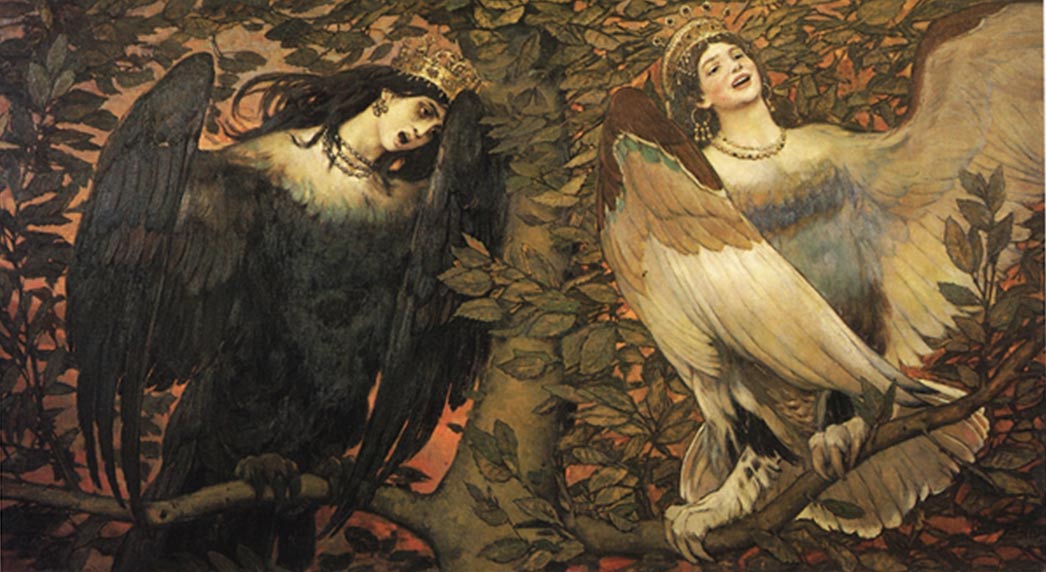
Alkonost and the Gamayun, the mythical beings of Slavic folklore


Viktor Vasnetsov's Sirin (left) and Alkonost (right) Birds of Joy and Sorrow, 1896

Alkonost and the Gamayun, the mythical beings of Slavic folklore

The Alkonost and the Gamayun are mythological creatures with the body of a bird and the head of a beautiful woman. They derive from Slavic and Old Russian folklore, and are described as mythical beings that have the ability to mesmerize humans with their enchanting voices.
References and depictions of Alkonost and Gamayun can be found in Russian chronicles, on 13th century cathedral monuments, and on jewels from the era of Kiev Russia. The Alkonos is typically described as a creature of the dawn while the Gamayun is related with the heavens.

The Alkonost

The Alkonost exudes beauty and docility and, filled with contentment, flies around projecting a sound that is both exquisite and hypnotising.  She enamours those who hear her voice and mentally immobilizes them until they disregard everything in order to hear her delightful melodies.  Her eggs are laid on the sea-shore and then placed in the ocean. According to one version of Slavic folklore, she is able to regulate the weather to her liking; there is a calm before a storm for seven days until the eggs fully hatch.
Alkonost. Russian Lubok of 18–19th Century
Alkonost. Russian Lubok of 18–19th Century (Wikipedia)

Ancient Origins of the Alkonost

It is not known for certain where the myth truly originates from but it is believed that the mythical beings may stem back to Greek Mythology. Alkonost’s name is said to have come from Alcyone, a Greek goddesss, who was transformed into a kingfisher. Similarly, the Alkonost with her spellbinding vocal chords and half woman and half bird form is comparable to Sirens, which she is often depicted with. 
Sirens were dangerous yet beautiful creatures in the form of half-woman and half-fish, although later they took the form of half-woman, half-bird. They lured sailors with their enchanting music and voices, leading them to their deaths.
‘Halcyone’ by Herbert James Draper, 1915.
‘Halcyone’ by Herbert James Draper, 1915. (Wikipedia)
The Siren is essentially associated with sorrow and darkness—records tells us that a Siren would arrive on Apple Spas in the apple orchard full of sorrow but in the afternoon Alkonost emerges to rejoice and laugh. 
She also sang beautiful songs to the saints and foretold future joys, but they charmed humans (especially merchants) with their exquisite voices until they forgot everything related to earth, followed the divine creatures until they died of lethargy and perished in the sea.
Odysseus and the Sirens by Herbert James Draper, c. 1909
Odysseus and the Sirens by Herbert James Draper, c. 1909 (Wikipedia)

The Gamayun

The Gamayun, like the Alkonost, is illustrated as a large bird figure with a woman’s head. Her iconic image represents happiness, prosperity and harmony. She is essentially a messenger for peace and sings beautiful melodies. She is considered to be prophetic in Russia as she is aware of everything that occurs within the world including man and animal, and she knows all amongst the gods and heroes. 
She lives on an island in the East near the Euphrates River or Eden. The Pythoness is not usually depicted with the Alkonost nor Siren, she is permanently alone knowing the secret fate of humans and the world.
Gamayun, in a painting by Viktor Vasnetsov
Gamayun, in a painting by Viktor Vasnetsov (Wikipedia)
Gamayun cooperated with pagan Russian gods, notably Kryshen, Kolyada and Dazhbog, and Veles. She is seen as a personification of Veles—a renowned deity of wisdom, who keeps secrets regarding the world and man’s creation. She is aware of the true nature of all the gods and humans, and sang in the Book of the Vedas.  
The being’s hymns are believed to be divine and to have magical properties, her voice is difficult to understand and decipher, but the few humans who can comprehend her words can have their future prophesied and opulence as a gift. In contrast to the Alkonost, the bird does not derive from ancient Greece but from Iranian mythology, ultimately gaining recognition in Russia.

The bird-maidens in Christianity

Both the Alkonost and the Gamayun played a major role within Old Russian society, including after the introduction of Christianity. When Christianity became the new monotheistic religion in Russia in 988 AD, Russian Pagans resisted. However, many were won over after their sacred gods and beings were incorporated into Christianity in one way or another, including the image of bird-maidens, which were immensely important throughout the society prior to the teachings of Christ. 
Old Russia fundamentally believed in nature and elements such as the sun, rain, wind, animals, and birds with protective signs. The Church took away protective symbols associated with the auspicious birds but allowed the customary depiction of the mythical beings to continue
The Alkonost, for example, is considered to be a personification of God’s will in the Russian Orthodox Church. The church thus used the iconic image of the Alkonost to illustrate the Holy Spirit, in the borders of Christian gospel books from the tenth to the thirteenth centuries. In the port of Korsun’ (Chersones) on the Black Sea and in Kiev, images of the Alkonost appeared on various household goods such as pottery dishes, gold pendants, and kolty. 
She can also be seen on several wood carvings such as The Dmitrovsky Cathedral in Vladimir and the Georgievsky Cathedral in Yurev-Podolsk built in the 13th century, in costume designs, and within the 16th century Lubok prints that sold in markets and fairs. 
Equally, the Gamayun gained significance among the Slavic nations. The large half-bird, half-woman had been depicted on the coat of arms of Russians settlements and in areas such as Smolensk, Mikhailovsk (Sverdlovsk region), Terbuny, and Udmurtia.  Russian mystic Danill Andreev stated that Alkonost and the Gamayun are among the most significant archangels in paradise, in the esoteric Christian-Buddhist cosmography ‘Roza Mira’ written between 1947 to 1957.
 Fundamentally, the divine half-bird, half-women creatures have managed to maintain their popularity in modern Russian due to their associations and adaption, and may continue to play a significant role in Russian folklore in centuries to come.
Featured image: Viktor Vasnetsov's Sirin (left) and Alkonost (right) Birds of Joy and Sorrow, 1896 (Wikipedia).

References

Matthews, John; Caitlín Matthews (2005). The Element Encyclopedia of Magical Creatures. HarperElement.
Koryikova M, Epimakhov A (2007). The Urals and Western Siberia in the Bronze and Iron Ages. Cambridge University Press. UK.
Burham, H (2015). The Esoteric Codex: Deities of Knowledge. Lulu Publishing. US.  
Andreev, D. (1997). The Rose of the World. Lindisfarne Books. USA.
- See more at: http://www.ancient-origins.net/myths-legends/alkonost-and-gamayun-mythical-beings-slavic-folklore-004076?nopaging=1#sthash.R5uOlItp.dpuf

SOURCE ANCIENT ORIGINS


cybershamans (karmapolice) / CC BY-NC-ND 3.0
Share/Bookmark

Wednesday, November 4, 2015

ARABIAN GENIES AND A FLYING MOSQUE


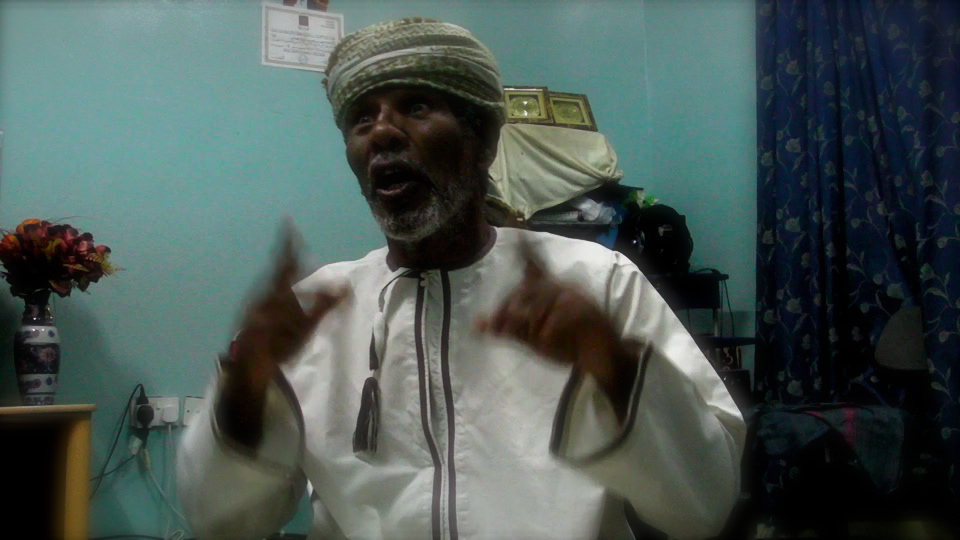
Moalim Salim (All photos by author)
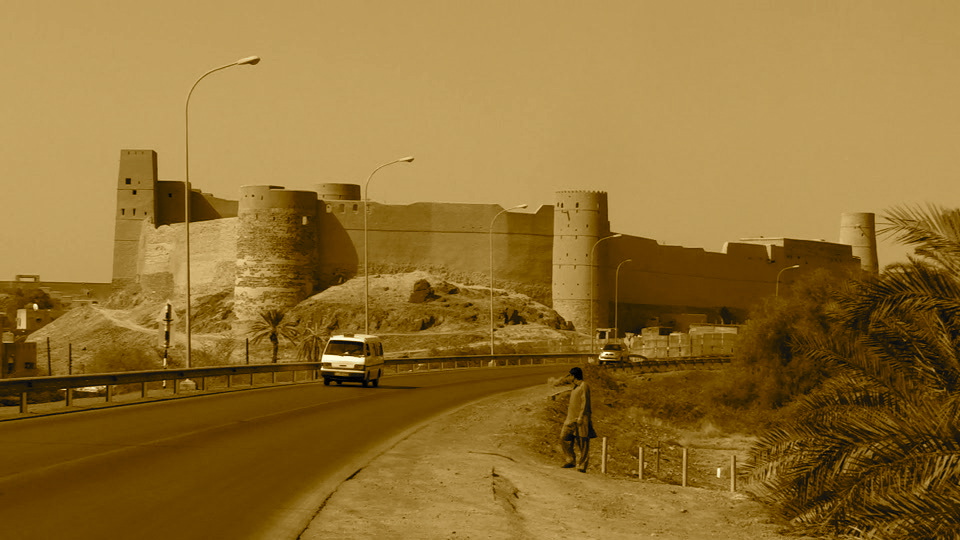
Baxter Jackson takes us on a tour of a sacred Omani fort that is no longer open to the public, to discover the legends within.
WHEN I ASKED my Omani students from Bahla about the legends of genies and sorcery, they squirmed in their seats and very reluctantly shared with me the rumors about those who channel the power of the djinn (genies), the tale of a bewitched tree in the souq, and the legend of the flying mosque.
Living in Nizwa (38 kilometers to the south of Bahla) and loving the paranormal, these stories — of wizards controlling genies for their own nefarious purposes, of a tree more cursed than the Hope Diamond, and of a mosque that appeared miraculously overnight — piqued my curiosity.
I needed to investigate firsthand. The only problem was that Bahla Fort, the epicenter of magic in the Sultanate, hasn’t been open to the public since it was declared a UNESCO World Heritage Site in 1988.
A colleague at the local college where I was teaching English just so happened to have a friend in the Omani Ministry of Culture who was willing to let us into the fort if we agreed to keep it hush-hush. A little bit more digging revealed that the man to talk to about such occult arts was Moalim Salim, a practitioner adept in dispelling djinn who had possessed the living.

Approaching Bahla Fort
In the shadow of the 17th century Jabrin Castle, Moalim Salim welcomed us into his villa (essentially a mini-castle complete with parapets). We removed our shoes at the door and were ushered into the majlis where we folded our legs under us and sat on the carpeted floor.
Over tiny cups of cardamon-laced Arabic coffee, he showed us his hajahs andhars, the amulets he uses to exorcise djinn. The first step in an exorcism, he explained, is to cross reference the alignment of the planets and stars at the time he is contacted with the birth sign of the afflicted.
Once that is established, and with the help of his sacred book of Al Ghazali, it’s all a matter of balancing the four elements of earth, wind, air, and fire. “When they’re out of balance on earth, natural disasters occur, and as it is on earth so it is with those Allah made of clay,” he explained.
Moalim Salim has been practicing what he refers to as ‘white magic’ since 1970, after a distinguished military career. He undertook his apprenticeship under the tutelage of Sheikh Said bin Abdulaziz Al Ta’abi, who learned his skill from the book of Al Ghazali, the great book of knowledge whose influence in Islamic thought is eclipsed only by the Prophet Mohammed himself.
The power of the djinn
Moalim Salim claims to have helped over 5,000 people all over the Persian Gulf. Masoud Al Shikely was one, a man from Bahla whose granddaughter fell under the spell of a jini and who had episodes of fits and blackouts (we shifted uneasily as he continued his story). For a period of ten days, Masoud’s family was under siege with spontaneous fires breaking out and nightly showers of stones during which his granddaughter would blackout and convulse.

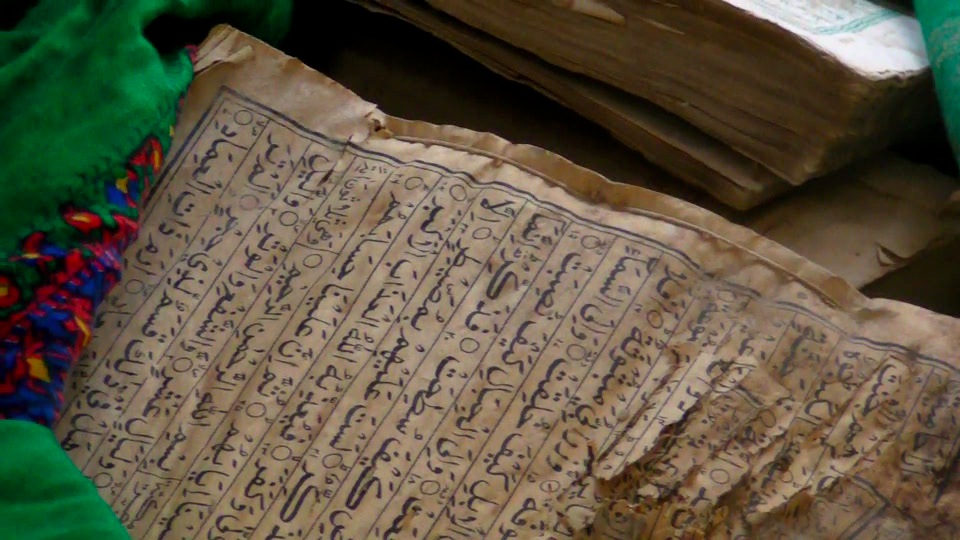
Old Quran at the Hill of Three Saints
When the burning of frankincense and the salt water baths didn’t work, an exorcism — guided by his own skillful hand and using the combined power of Quranic recitations along with the book of Al Ghazali — was finally able to free the little girl and the family from the djinn’s reign of terror.
We nodded in appreciation of the recounting, took one last sip of cardamom tea, and thanked him for his time. The next stop on our tour of the little village in the Omani hinterlands — the epicenter of all genies — was Bahla Fort.
A wizard haunting
Under the harsh rays of an Arabian sun, the iron door creaked as the gatekeeper opened it to let us into the deserted castle. From behind the milky whiteness of a cataract eye, he guided us to the area of the fortress where the djinn had been most wicked. All archeological attempts at restoration here had been repeatedly frustrated by an unseen force at night: stones erected and mortar plastered during the day would be found undone the next.
1400 years ago, a man was stoned to death by the villagers of Bahla for practicing wizardry.
Legend explains this phenomenon. 1400 years ago, a man was stoned to death by the villagers of Bahla for practicing wizardry. A fort was built on his grave to prevent his followers from turning it into a shrine. His spirit soon began to appear in the labyrinthine back alleyways of the village.
Rumors swirled that the murder victim was teaching others black magic from beyond the grave. Those who die by violence here are said to become djinn and haunt their place of death.
The scourge of the village
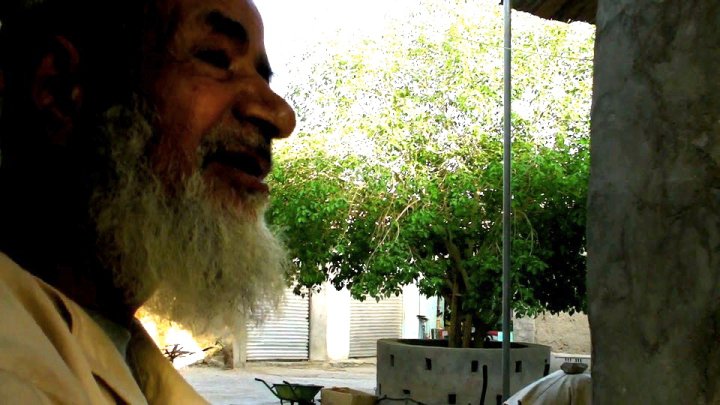
Whether the bewitched tree in the heart of Bahla’s old souq took root in the time of the wizard’s murder is unknown. The legend goes that if anyone not from Bahla touched the tree, they would be doomed to great misfortune and an untimely death.

Old man and the magic tree
The tree itself is generally believed to have been a frankincense tree whose sap had been cultivated for millennia and used in religious ceremonies by the likes of King Solomon and Cleopatra.
It is still being used to this day by our local spiritual guide, Moalim Salim, to delve into the realm of the djinn, which the Quran describes as a parallel world of fire without smoke. What stands today in its stead bares little resemblance to the gnarled and twisted monster that spontaneously burst into flame when the locals, believing it to the scourge of the village, cut it down out of fear.
The flying mosque
On the other side of the 12 kilometer fortified wall surrounding Bahla is an ancient cemetery of unmarked graves reflecting the austere heritage of Ibadhi Islam. During the Nabahina Dynasty (12th-17th centuries) when Bahla was the capital of Oman, three Sufi mystics took up residence here just outside of the city’s walls to practice their unorthodox sect of Islam, which included saint worship.

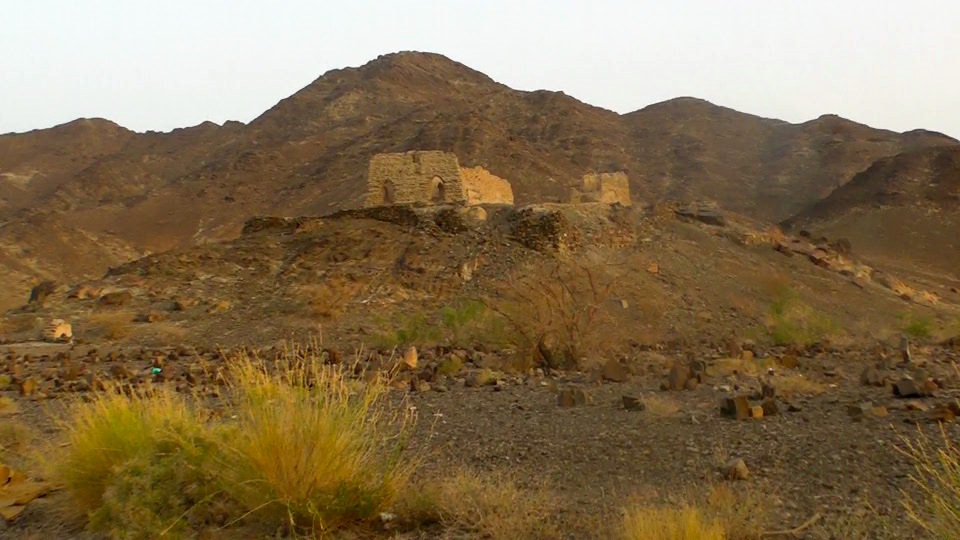
Hill of the three saints
These hermits — or saints, as some believed them to be — had tapped into the parallel world of the djinn. It was by this power that the now crumbling remains of the mosque in the middle flew from Rustaq, fully intact.
There from the Hill of the Three Saints, we watched the sun dip behind the jagged outline of the Hajar mountains. Gazing reflectively at the lengthening shadows stretching across the plain of unmarked graves before us, I felt what Carlos Castaneda must have felt after his first meeting with his curandero (spiritual guide), Don Juan, in the deserts of Mexico.
Wondering and wanting to believe in the real possibility of a separate, but seemingly legendary, reality. 
by Baxter Jackson
source matadornetwork

cybershamans (karmapolice) / CC BY-NC-ND 3.0
Share/Bookmark

Tuesday, November 3, 2015

THE CURSED AMETHYST

ALLISON MEIER / 02 OCT 2013

31 Days of Halloween: On Atlas Obscura this month, we're celebrating Halloween each day with woeful, wondrous, and wickedly macabre tales all linked to a real locale that you can visit, if you dare.
article-imageThe Cursed Amethyst (photograph by the author)
Ever since it was stolen out of India during the Rebellion of 1857, this amethyst has brought its owners nothing but despair and devastation. Known as the Cursed Amethyst or, in a bit of a misnomer, the Delhi Purple Sapphire, the stone now resides in the Vault of the Natural History Museum in London alongside such other precious stones as a Martian meteorite and a "medusa" emerald. Its last owner had it locked away within seven different boxes in a bank safe, where it was not to be removed until three years after his death. 
A Bengal cavalryman named Colonel W. Ferris is said to have brought the amethyst to England after it was stolen out of the Temple of Indra in Kanpur. Yet the beautiful violet stone's sinister nature was soon manifested when he lost just about everything he owned and his health deteriorated. The same misery happened to his son who inherited the stone, so he gave it to a friend who subsequently committed suicide. In an unsettling twist, that friend had willed the stone back to the son who found the amethyst returned to him now with a body count to its legend. 
article-imageEdward Heron-Allen (via Wake Forest University Library)
In 1890, Edward Heron-Allen received the stone. Heron-Allen was an ambitious man with an insatiable quest for knowledge, having written books on violin-making, palmistry, and translations of Arabic literature. Yet he soon found himself rattled by a series of disasters. Perhaps not making the connection to his recent acquisition, he gave the stone to a friend who was a singer who suddenly found "her voice was dead and gone," and she never sang again.
Desperate to be rid of the thing, Heron-Allen tossed it into Regent's Canal. Yet three months later, after having been rescued from the depths by a dredger, a dealer gave it back to him. Heron-Allen declared the amethyst "cursed and stained with blood" and he had it secreted away in his bank vault within seven locked boxes.
Three years after his death in 1943, as he'd instructed, his daughter unlocked the amethyst and gave it to the museum, although accompanied by a letter that cautioned against the lilac stone's history of evil, reportedly reading: "Whoever shall then open it, shall first read out this warning, and then do as he pleases with the jewel. My advice to him or her is to cast it into the sea."
Hall leading to the Vault where the amethyst is held at the museum (photo by the author)
The amethyst went on display in the Natural History Museum in 2007, set within a ring of silver with two scarab beetle beads decorating one end. Yet some believe the curse has yet to fade. Curator Richard Savin states in this Museum Secrets video from the History Channel that on coming with the amethyst from a symposium of Heron-Allen Society: "we drove through the most amazing storm we'd ever witnessed. Lightning was flashing on both sides of the car and my wife was shouting at me: throw that damn jewel away, you shouldn't have brought it!" Anytime he's attempted to attend a subsequent meeting he's gotten violently ill. Of course, he notes, it could all be a coincidence.
CURSED AMETHYST: NATURAL HISTORY MUSEUM, London, England

source atlasobscura.com


cybershamans (karmapolice) / CC BY-NC-ND 3.0 Share/Bookmark

Saturday, October 24, 2015

ICOANA SPORIREA MINTII

Icoana Sporirea Minții

Articol realizat de Filip Scarlat
Icoana Sporirea MințiiÎn casa fiecărui creştin se găseşte cel puţin o icoană a Maicii Domnului, ea având, cu siguranţă, cele mai multe reprezentări din iconografia ortodoxă. Cele mai multe dintre acestea au o istorie interesantă, de multe ori neştiută de credincioşii care le posedă. 
Despre icoana „Sporirea minţii” nu ştiam foarte multe, de fapt, nu ştiam nimic. Am aflat că ea este considerată ajutătoare a copiilor, dătătoare a harului înţelepciunii şi vindecătoare a slăbiciunii minţii. M-am gândit că poate am zărit-o, cândva, dar mintea mea nu a reţinut denumirea ei, aşa că am căutat rapid pe internet această reprezentare a Fecioarei Maria cu pruncul.
Maica Domnului este reprezentată împreună cu pruncul Iisus, în picioare, înfăşuraţi până la umeri într-o mantie, frumos ornamentată. Capetele lor sunt acoperite cu coroane de aur, iar deasupra sunt zugrăviţi trei heruvimi şi un alt heruvim, cu aripile larg deschise, este reprezentat sub picioarele lor. În spatele lor se află poarta raiului, iar în partea de jos a icoanei este reprezentată imaginea Ierusalimului ceresc. Pe părţile laterale sunt reprezentaţi îngeri stând în picioare sau îngenuncheaţi pe nori, având în mâini câte o lumânare aprinsă.
 La origine, ea este o icoană rusă mai rară care se păstrează astăzi în Biserica Acoperământul Maicii Domnului din Romanov-Borisoglebsk, astăzi oraşul Tutaev. Originile ei se pare că datează din secolul al XVII-lea, din timpul patriarhului Nikon, atunci când a avut loc răscoala rascolnicilor provocată de neînţelegerile cauzate de revizuirea cărţilor de cult şi a practicilor religioase din Rusia. 
Din cauza acestor tulburări, un om evlavios, care era şi iconograf, frământat de situaţia îngrijorătoare din ţara sa, neştiind cum să procedeze în această situaţie, a ajuns aproape să-şi piardă minţile, moment în care s-a rugat cu putere Maicii Domnului ca să primească ajutor. Aceasta i s-ar fi arătat, cerându-i să picteze o icoană cu chipul ei, iar din istorisirea protoiereului Vladimir Miroslavski, cel care relatează întâmplarea, pictorul nu a reţinut destul de bine imaginea Maicii Domnului şi s-a rugat către aceasta de mai multe ori, ca să–i lumineze mintea şi astfel să încheie lucrarea. 
Alte reprezentări ale icoanei s-au mai descoperit în Catedrala Schimbării la Faţă din oraşul Ribinsk, gubernia Iaroslavului, dar se pare că această versiune s-a pierdut şi în Biserica Maicii Domului din Tihvni în secolul al XVIII-lea.
Tradus din limba rusă, acatistul consacrat icoanei Maicii Domnului „Sporirea minţii” subliniază importanţa acesteia astfel : „icoana Maicii Domnului îi luminează cu lumina cunoştinţei dumnezeieşti pe cei aflaţi în întunericul neştiinţei, limpezeşte mintea cea întunecată de păcate”. 

Dar în acatist întâlnim şi referirea la oraşul Loreto unde s-ar afla o reprezentare asemănătoare a Maicii Domnului şi precizarea că aici s-ar afla casa Maicii Domnului. Astfel, pe lângă originea ei rusească, apare şi posibilitatea ca ea să fie legată de lumea catolică. Nu ştiam nimic despre acest oraş sau despre o casă a Maicii Domnului, aşa că am pornit în căutarea altor informaţii. 

Oraşul Loreto din provincia Ancona, din Italia, este recunoscut ca un important loc de pelerinaj din lumea catolică. Aici s-ar afla o statuie a Fecioarei Maria care este numită “Fecioara neagră”, aflată într-o biserică numită a “Sfintei Case” din Nazaret. O primă istorisire catolică ne spune că autorul statuii din cedru ar fi evanghelistul Luca şi că ea s-ar fi păstrat într-o casă din Nazaret care ar fi fost strămutată în Loreto de către îngeri, în secolul al XII-lea, atunci când turcii au început să cucerească teritorii în Orient. 

Ţinând cont că în secolul al XII-lea au avut loc numeroase cruciade, fiind aduse în Italia şi în Europa de Vest multe relicve din Ţara Sfântă, pare mai plauzibilă ipoteza că aceste obiecte sfinte să fie aduse de cruciaţi în Italia. Casa nu ar fi fost strămutată de îngeri, ci pietrele ar fi făcut parte din zestrea fiicei lui Nichifor Anghelos al Epirului la căsătoria acesteia cu fiul regelui de Napoli. Statuia ar fi fost admirată de ambasadorii ruşi ai marelui duce Vasilii al III-lea în anul 1528, de aici pornind ideea cum că ea ar consitui prototipul pentru viitoarea reprezentare realizată în Rusia. 

În prezent vechea statuie nu mai există deoarece a fost distrusă într-un incendiu din anul 1921, ea fiind înlocuită cu una asemănătoare. Aflându-ne la început de an universitar am considerat că este necesar să spun câteva cuvinte si despre o altă reprezenare a Maicii Domnului, care pare să fie strâns legată de prima. Icoana “Maria-Tronul înţelepciunii”, a fost pictată de Ivan Rupnik la îndemnul papei Ioan Paul al II-lea pentru anul jubiliar 2000. 

Ea este dedicată lumii universitare, pentru a-i ajuta pe studenţii din învăţământul superior să ajungă la adevărata înţelepciune. Icoana a circulat pe toate continentele, iar în data de 30 noiembrie 2013, papa Francisc I a dăruit icoana studenţilor francezi. Pe durata unui an icoana a ajuns şi va ajunge în mai multe centre universitare din Franţa, unde vor avea loc mai multe manifestări religioase. 

Primind această icoană, lumea universitară este invitată să se roage şi să mediteze avându-o pe Fecioara Maria ca model al înţelepciunii umane şi Mamă a înţelepciunii divine care este Hristos.

SURSA


cybershamans (karmapolice) / CC BY-NC-ND 3.0
Share/Bookmark

Sunday, October 11, 2015

The Secret Lives of Elves and Faeries: The Truth behind the Story of Rev Robert Kirk

The Secret Lives of Elves and Faeries: The Truth behind the Story of Rev Robert Kirk


cybershamans (karmapolice) / CC BY-NC-ND 3.0
Share/Bookmark

Friday, May 15, 2015

Misterele Munţilor Retezat


Pentru cei care iubesc muntele, o să fac azi o incursiune în frumuseţea şi misterele Munţiilor Retezat.
Majoritatea aţi auzit de Parcul Naţional Retezat, un adevărat templu natural care găzduieşte o faună şi floră din cele mai rare şi mai interesante, un tezaur pentru patrimoniul românesc. Munţii Retezat fac parte din Carpaţii Meridionali, mai exact grupa muntoasă Retezat-Godeanu. 
Se înalţă între două depresiuni importante, Petroşani şi Haţeg şi între două râuri, Râul Mare, care îi delimitează la nord şi est şi Jiul de Vest, care îi delimitează la sud. Sunt înconjuraţi de Munţii Ţarcu la vest, Munţii Godeanu, la sud-vest şi Munţii Vâlcan, la sud, unde găsim staţiunea de ski, Straja.
Partea cea mai importantă a masivului este alcătuită în principal din roci cristaline şi se numeşte Retezatul Mare, aici găsim şi altitudinea maximă a grupei Retezat-Godeanu, vârful Peleaga de 2509 m. Partea sudică, cu relief dezvoltat şi în mase mai importante de calcare, se numeşte Retezatul Mic. 
Ele se unesc în apropierea lacului Bucura. Lacul Bucura este partea cea mai interesantă şi cel mai deosebit obiectiv turistic pe care îl oferă acest masiv. Pe lingă peisajul extraordinar şi altitudinea care te face să simţi că ajungi la zei, lacul Bucura este considerat un centru energetic foate puternic de către oamenii de ştiinţă din întreaga lume.
Cercetătorii afirmă că lacul ar fi baza unei piramide energetice, formată din vârfurile celor trei munţi care înconjoară lacul şi că aici s-ar produce diferite fenomene paranormale, deoarece se formează un câmp magnetic care a mai fost întâlnit doar în Triunghiul Bermudelor. 
Sătenii locului şi alţi oameni din zonă, spun că în unele nopţi, Vârful Gugu consi­derat a fi vârful piramidei energetice de la Bucura, este îngropat într-o ceaţă densă care efectiv îl face să dispară. Ciobanii aflaţi pe munte cu oile când s-a întamplat un astfel de fenomen, au declarat că deşi erau singuri cu oile pe masiv, după ce a apărut ceaţa au văzut diferite feţe, umbre de oameni foarte mari, voci şi lumini puternice care i-au speriat peste masură. 
Acest fenomen a atras atenţia multor cercetători din întreaga lume care au venit în România pentru a studia această zonă din munţi încărcată de istorie şi simbolism, conclu­zio­nând că ceea ce se petrece în masivul Retezat este similar cu Triunghiul Bermudelor, o poartă către o altă dimen­siune.
Un alt articol explică mai detaliat cele expuse de mine: “La semnalarea turiştilor despre existen­ţa unor energii stranii absolut inexplicabile în zona Vârfului Gugu care, în anumite ore din noapte “dispare” cu desăvârşire, un număr de 7 specialişti s-au deplasat în acea zonă, stabilindu-şi tabăra – în noaptea de 4 august 1991 – în apropiere de Vf. Gugu. Cu acea ocazie, membrii comisiei au consemnat apariţia unei “explozii luminoase” care părea că iese chiar din munte, în apropierea cabanei şi lacului Bucura din Munţii Retezat.
Culmea este că “explozia luminoasă” care a ţâşnit spre cer, a luat cu ea Vârful Gugu! Întreaga noapte, membrii comisiei nu au putut aţipi din pricina unor “apăsări atmosferice”, care le provocau o acută surescitare. 
După “pulverizarea” avionului IL-14 care se îndrepta în direcţia Vf. Gugu – noaptea de 13-14 august 1991 – în Curmătura Bucurii, în aceeaşi zonă, la poalele Vf. Gugu, s-a deplasat cea de-a doua comisie constituită din 10 specialişti care, în cele două zile de observaţii 17-18 august 1991, au consemnat spaime fără motiv, acute senzaţii de sufocare, în special noaptea, asociate explozii­lor luminoase, liniştea unui peisaj devenit brusc “marţian” şi impresia că sunt suprave­­ghea­ţi de “ceva”, “cineva” cu stăruinţă. 

Interesant este că, întorşi la Bucureşti, membrii comisiei din 17-18 august 1991, aveau să constate că pelicula şi camera nu înregistraseră nici o imagine dintre cele fotografiate şi filmele din câteva zeci de unghiuri faţă de Vf. Gugu.
Astfel în accep­ţiu­nea oamenilor de ştiinţă, Vârful Gugu şi Lacul Bucura sunt văzute ca centrul unuia dintre “punctele energetice esenţiale” ale Planetei. Legenda populară, spune că Vârful Gugu era un templu dacic închinat zeului Zamolxis care îşi făcea apariţia aici, venea aici când muntele se cufunda cu totul în ceaţă pentru a vedea alinierea stelelor şi a citi viitorul în astre. 
Astfel de legende circulă şi despre Vârful Retezat, care spune că doi uriaşi s-au luptat pentru iubirea unei pământence şi unul dintre ei a retezat vârful unui munte cu plugul, dând naştere numelui masivului. Nu toată lumea care a fost la Bucura a văzut astfel de fenomene, dar toţi au putut spune un singur lucru: când ajungi în Poiană, la 100 de metri distanţă de lacul Bucura şi Vf. Gugu, pici din picioare.
Oricât ai fi de antrenat şi pregătit pentru urcări pe munte, în Poiana pici din picioare. Dacă te ridici şi urci, când ai ajuns sus pe malul lacului dispare orice stare de oboseală. Te umpli de energie brusc şi inexplicabil. Asta nu s-a întamplat doar câtorva turişti, ci i se întâmplă oricui va merge acolo. 
Dacă aţi găsit interesant acest articol vă invit să mergeţi la lacul Bucura şi să vizi­taţi masivul Retezat care vă întâmpina cu peisaje de o frumuseţe aparte, după cum puteţi vedea din imaginile explicite, care au surprins câteva dintre frumuseţile naturii la o altitudine de peste 2000 de metri.
Roxana TOLTEANU


cybershamans (karmapolice) / CC BY-NC-ND 3.0
Share/Bookmark

Related Posts Plugin for WordPress, Blogger...

Share

Twitter Delicious Facebook Digg Stumbleupon Favorites