


Diferente de abordare ale A.I.ului.
14 hours ago


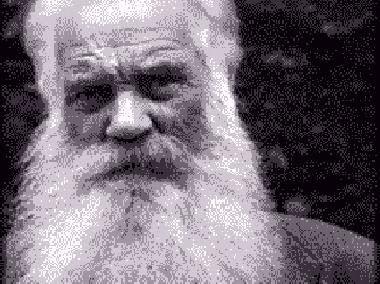 Sveinbjörn Beinteinsson, the son of the farmer Beinteinn Einarsson from Litlabotni-on-Hvaljardsbeach and Helga Pétursdóttir from Drághals in Svindal, was born on Apr. 4, 1924. He died on the 24th of Dec., 1993, from heart failure. In 1972 he founded the Ásatrúarfélag, the Icelandic heathen organization, of which he was the chief góði until his death. Since 1991, Sveinbjörn lived on his land in Drághals in Bergmassiv Skardheiði (approx. 60 mi. from Reykjavik), where the 6 ½ foot statue of Þor can be found.
G. G.: You were the founder?
S. B.: "Yeah, I was already interested in the old Gods when I was a child. I snatched up the wisdom out of the Sagas, the Edda and the old stories. By the time I could read I was already pouring over the Sagas and by the time I turned 16 I had published my first poems dealing with the Gods."
G. G.: What's your actual occupation?
S. B.: "Farmer, author, and poet. My forebears have always been farmers."
G. G.: You live here by yourself on your land. Isn't that kinda lonely?
S. B. : "Oh no, my nearest neighbor lives 3½ mi. from here, and, besides that, I'm completely surrounded by beings, Landspirits--the Hidden folk."
G. G.: What about when you're sick?
S. B.: "I go out into Nature and gather herbs to cure myself."
G. G.: What do you write?
S. B.: "Works about Iceland's history, songs, poems. I also have a scholarly book about the technical construction of Old Icelandic poetry. Historically, we have some pretty complicated poetry here."
G. G.: Are you baptized?
S. B.: "Baptized, confirmed, the works. I've always had pretty close ties to Christianity, at least, as it's practiced here in Iceland."
G. G.: Are you still in the Church?
S. B.: "No, before someone can join us, he first has to leave the Church."
G. G.: When did the idea first come to you to start a movement out of your belief in the old Gods?
S. B.: "In the winter of '71/ '72. At that time we were getting a lot of Jesus Children into Iceland, and I said to myself, 'Wait a minute, we have older beliefs in Iceland. Why should we not bring them back to life? How come we're bringing in all these other sects?' I gathered up a group of people (we were 12 of us at the time) and soon we had a few more. The idea quickly began to sound real good to us."
G. G.: Was this a conscious movement against the sects coming in?
S. B.: "Yes, in direct opposition to it. We wanted to give people a chance to belong to the old religion. The religion that was here on Iceland before there was Christianity, that was forbidden us in the same year that Iceland adopted Christianity."
G. G.: Was the old folk religion always kinds of wavering about under the surface of things?
S. B.: "Absolutely! It was alive and well all these years."
G. G.: Why were they practiced only behind closed doors for 970 years, and only now are they coming out in the open?
S. B.: "Because they were illegal. The old religion was practiced only in secret because the Church was feared as the strongest force in the country. Iceland was Catholic until 1550. Then came the Reformation and with it came the Evangelical Church of the State. Not until 1874 did we get religious freedom of choice and only then could one leave the Church. After that, all we needed was a little time to let the dust settle before starting our move."
G. G.: You said that the old religion lived on for a 1000 years; how was this expressed?
S. B.: "The country folk always believed in Nature, in natural experience, and in Beings that live in Nature like elves, gnomes, and good, positive-natured Beings which live near people and help them. It could also be that these the Dead as well. No one knows where these creatures live, but it is known that certain people are always surrounded by them."
G. G.: Not all people?
S. B.: "No, not all of them."
G. G.: For what reason do these Beings seek out the people that they follow?
S. B.: "Why this happens to only certain people no one knows. It's a special kind of luck, though, when one receives this kind of support. It has absolutely nothing to do with the "holy things" as we know them from the Church, though."
G. G.: Are there ghosts or spirits on your land?
S. B.: "I've never seen them, but I sense them."
G. G.: What do you call yourselves? Heathens?
S. B.: "We call our religion Ásatrú, the belief in the Æsir, in the old norse Gods. We don't want to just call ourselves heathens because there are so many different types of heathens. "'Heathen' is the overall term for it."
G. G.: How did you gain official, legal recognition for the religion?
S. B.: "We didn't have to demonstrate or have a revolution. We just founded a collective of people who believed in the Æsir. In the law, it's forbidden to go out and do missionary work. No one should be able to force his beliefs on another. They come on their own when they are minded to do so."
G. G.: What was the official reaction to the emergence of your collective?
S. B.: "At first they were skeptical. I had to go to the Minister of Justicewho happens to be pro religious freedom and explain our goals. Anybody can start his own religion, but to get the same recognition as the State Church, requires permission from the Minister of Justice."
G. G.: Was it difficult to get this special permission?
S. B.: "I knew the Minister of Justice. Earlier he had been a law professor at the university in Reykjavik. I reminded him about old, pertinent law cases where he had interpreted the law pertaining to religions in particular ways, because it was easy for me to read through them, that it was legal what we were doing. That's how we finally got our religion recognized. Then I had to apply for a License to Practice with the police, and since then we've had the same rights as the Church."
G. G.: Which rights are those?
S. B.: "I am able to legally marry couples , for example. In Iceland, you can't just go to the Justice of the Peace. The marriage between couples in our collective is legal."
G. G.: How many couples have you married? A lawyer explained to me that there might be similar problems in Germany as well.
S. B.: "Around 10 couples.
"I heard about a case where a couple got married sort of as a joke. The young lady was of legal age and found out the next day to her surprise that the marriage was legal. She held off for an annulment because was going to have to give up ½ all her possessions. The thing wasn't really a joke. The couple had to apply all the way up to the Parliament. They stated the they really weren't suited for one another and wanted them to declare the marriage invalid so they wouldn't have to go through with the legal proceedings of the separation, but the Parliament didn't come through with it. The marriage was valid and fully legal. They had to go through with a divorce just like anybody else."
G. G.: How did the State Church react to the legal recognition?
S. B.: "During the hearing the Minister of Justice called the Bishop to the witness stand. Naturally, he was against it. The Bishop also gave an official ruling against the legalization of the collective. But the Ministry struck it from the record. Then he wrote a lengthy article in the newspaper, but the publisher of the paper had reacted rather favorably to our bringing the old religion back.
"In Parliament there was also A bid by a member of the conservative party that our religion should not be legalized. There was a debate but the opposition wasn't able to pull it off. The Minister of Justice himself put in a good word for our religion and personally stood behind it and us."
G. G.: Does he belong to your movement?
S. B.: "No, but here in Iceland we're so tolerant towards the practice of different religions that we are pretty well understood. They also tried the same thing in Norway but they weren't successful."
G. G.: How many members did you have in May of '73?
S. B.: "40."
G. G.: How many members do you have today (1986)?
S. B.: "Eighty registered members. But a larger number than that goes to our meetings, to the blóts. They are 'Friends of the Félag' and they are in the majority, in other words, they are not officially registered. Blóts are out ceremonies; the old norse word for 'sacrifice.'"
G. G.: You still sacrifice in this day and age?
S. B.: "We don't know exactly how our ancestors conducted these feasts, but we don't sacrifice. First, when we gather, everything is blessed and made holy."
G. G.: Is the Function headed by a high priest?
S. B.: "There is an Allherjarsgóði, a chief-góði, of the highest order, or better: the highest Judge. In the past each district had its own góði. Once a year, they met together at the 'Judgment Place.' They held both priestly and legal functions in the district. After the christianization of Iceland, the religious function was dropped. The chief-góði, opened the meeting called the Þing and blessed it. This is he we also begin our meetings. Then the Sagas are read and the Gods are toasted."
G. G.: A lot?
S. B.: "Symbolically, out of a drinking horn. We prepare the mead, and then we drink. After that, anyone can stand up and say whatever he has to say. Here in Iceland, folks also like to recite poetry. Lastly, folks are gathered together, they feast together, and they drink together."
G. G.: Which Gods are prayed to?
S. B.: Mainly, Þórr (Thor). He gets the highest of praises. As a God, He is more common than Óðin (Odin), more people-friendly. He is the God of farms; He makes the earth fertile with His Hammer; The God of Strength and Help."
G. G.: Are there ritual items on the altar at the ceremony?
S. B.: We have a drinking horn and a small statue of Þórr.
G. G.: In Germany the religion is called Óðinism. What role does Óðinn play in your religion?
S. B.: "Anyone can pray to the Gods in whatever manner he likes. Óðinn stands for Wisdom, the Imagination, and great Knowledge."
G. G.: Isn't He also the God of magicians and sorcerers?
S. B.: "That is a part of His knowledge, yes, absolutely! The Gods are often talked about and discussed according to Their different functions."
G. G.: But the chief-God is Óðinn, i.e., masculine.
S. B.: "The Goddesses play a very large role. Freya, the Goddess of Fertility, is very important. She is the counterpart to Óðinn."
G. G.: Is She at the same level or is She subordinate to Him?
S. B.: "On the same level. There is no difference."
G. G.: What roles do women play in Ásatrú?
S. B.: "With the registered members now there is 80% men and 20% women. That might be because women are a little less likely to want to go up before the judge and other officials. One has to leave the Church first, and women often shy away from formalities. The visitors who come to the blóts are usually women. Society in Iceland was never very patriarchically structured. Women have always had more rights and were always looked upon more as equals than they were on the continent."
G. G.: What does the word "witchcraft" mean to you?
S. B.: "Not a living person; the concept stands for a type of power, a magical power."
G. G.: What kind of a power?
S. B.: "It plays a main role, whatever kind of power it is, especially when it mixes with our own strengths. It happens with that combination. My own energy is strengthened through that no matter what I do. The power which stems from close contact with Nature was readily available to people in the past. Over the years, we lost these abilities and attempted to replace it with pseudo things like more powerful cars and bigger houses. Now, we know that this power is inherent in us and we want to revive it. This is my own personal opinion. But, most of the members of this religion are going in this direction. All the ones who earnestly seek it out, find it to be true. Often we have to admit, that we can develop more spiritually. The ability must be cultivated, we can't afford to ignore it any more. If only science had recognized how much we can do much with our minds and our consciousness, they wouldn't have lead us off this path."
G. G.: Even thoughas you sayit doesn't ever come up, I'd like to talk about this magical knowledge a little more.
S. B.: "It is the special task of our religion to rebuild our ties to Nature, to all the powers that are within Nature, in order to better understand them. There a tree grows or a brook flows, and man is only a part of the process. He must be aware that he is a part of the natural flow of things. The old people, the kind I knew as a kid, who were surely Christians, but they didn't overdo it with the Christian thing. Normally, they had a mix of beliefs in Christianity but also in nature. They had a sense that there were elves and other Beings around them. There were much better relationships between man and nature and people among themselves."
G. G.: You have here in Iceland partially due to the island's isolation and partially to the political move for independencea Republic since 1944somewhat of a special situation.
S. B.: "Yes, technical advances in the world pushed us forward. Machines, cars, jet planes, modern shipsall of it came at oncein a single generation. We hadn't gone through any of the modern developments like the rest of the European countries. Take, for example, sailing. For a 1000 years man has been sailing. It took thousands of years for man to learn sailing. And, suddenly, in the space of one generation came steamships, then motor boats, all the way up to atomic powered submarines. That was all wa too fast, and much too much at one time. That can hardly be done in one generation. Amazingly enough, man adapted quickly to all the new things but at the same time lost his normal, intuitive relationship to Nature. Instead, man created a dead environment. He surrounded himself with a man made wasteland."
G. G.: Is Nature taking revenge while she dies because man has lost his relationship with her? Is that what you're saying?
S. B.: "Yes, I can well remember what the old people used to say to me as a kid: 'Let the tree stand; leave the moss on the rock; don't kill the fly in the window!' Nature was a part of our lives back then. After the arrival of technology and science, we have to wait because the soul comes in second. Mankind seems to me to be like someone who is being forced to dance. A long time ago, I knew of people who were forced to dance and couldn't stop dancing until they either fell completely exhausted or dropped dead. That how it is in the world today with all the its wars. The world is dancing itself to death and can't stop itself."
G. G.: People of your generation can still remember those times. In that case you guys have it easier on your conscience than we do on the continent.
S. B.: "Yeah, we remember the time before technical advances which came to us kind of late. These closer contacts to the old time and the closer contact with Nature and also our cultural past helped pave the way for our religion."
G. G.: Do you want to turn back time?
S. B.: "No. I don't sit down with my group and say, 'Now that we have recaptured the belief system of our past, let's start living like we did in the past.' I don't want to turn back time. I have to live my life in the present. We couldn't nor would we want to do away with the new technologies."
G. G.: You don't avoid driving cars or watching TV?
S. B.: "No, we have to learn so that we can make do. These things shouldn't be the destruction of our sense of well-being that man has has fostered up to this point. Science has to have a balance in our lives. We no longer feel whole. In my youth, I experienced this same balance still when I was living with the Elders. They conducted their lives so as to hurt no one. There are hardly any people left who conduct themselves in this way. Fast paced paced technology has destroyed that."
G. G.: You are trying to lead people towards this 'sense of well-being'?
S. B.: "That is one of our main goals."
G. G.: What are some of the others?
S. B.: "To be able to live with this sense of well-being, and not to lose the balance"
G. G.: Do you believe that you can bring people through your religion to such an awareness that they will be able to stop dancing?
S. B.: "In our religion I certainly see a hope. You've got an important point. You asked, at the beginning, why just now the old religion is being brought out of hiding and into the open. I answered that it was because of the fear of the Church's power. But, it was also because of something elsethe fear of the science which came up at the beginning of this century. The fear that one would make a fool out himself if he admitted to believing in elves and gnomes, that there are ghoststhat's spooky."
G. G.: Can people admit to it today?
S. B.: "Today, I think, science has been brought more into the question. Now a person can admit to believing in something that can't be seen. We're finally getting over the strict attention we've been paying to technological advancement and are able to see exactly what it has gotten us. It hasn't brought us what we'd been hoping for for the past 50 years."
G. G.: Is it that you want to create a "new society?"
S. B.: "No revolution. Science has also provided us with good things as well such as medicines, knowledge about epidemics. Although with it we've also caused some of the hunger and starvation in the Third World. Now we are attempting to take care of our spiritual side, to learn, to drive away our lust for aggression, to long for less instead of desiring everything. People can learn to be less aggressive with each other and help one another instead of going after one another all the time."
G. G.: Why do you think that through your religion you will be more successful than Christianity with its "Love thy Neighbor?"
S. B.: "Our religion is more in line with Nature, more closely tied to natural harmony. Christianity has officially set itself up against this harmony. For example, the Inquisition. It does not permit any normal, uninhibited relationship with those things that are around us all the time; instead it draws a strict clear line in front of us. That is what I am against."
G. G.: How would I, through your religion, find this harmony? Will it change my everyday life if I put your religion into practice?
S. B.: "Everything will get easier. You feel better. People take themselves far too serious when something goes wrong. You learn to take things as they are, to be responsible and to put your own energy to better use. It's not possible to be this way all the time. To do that one also needs to be completely at peace with himself and the environment."
G. G.: After the ceremonies does a person feel a special energy?
S. B.: "It's not only the blóts, the official ceremonies, but also by being together with like-minded people. That's where the energy is felt. One senses the positive energy of the others and it strengthens him. It's like being in tune is for instruments, a single note or a chord, a harmony. For me the relationship between Nature, Iceland's ancient history and the language is also very important. We strive to speak a beautiful good Icelandic language. Often we say jokingly that we should speak the same beautiful language that Óðinn did."
G. G.: Can you direct this positive energy towards something in particular?
S. B.: "Careful! I can help other with the energy that I get, but I mean that in a general sense in that I emit kind of a positive radiance around me not in the sense that I could heal someone or the like. We're are not going in the direction of "the occult." People have to take care not to be tossing all these things together or it'll become like a watered down soup or a stew."
G. G.: To accept things as they are, that sounds so much like fatalism.
S. B.: "Yes, a type of fatalism, in a sense. I'm not in a constant battle with things, but, then, I also don't run away from problems either."
G. G.: But, if you hadn't fought your religion would never have been officially recognized.
S. B.: "It's difficult to say which method a person should use. People need to look to themselves to decide what is happening and where we stand. People must make this perfectly clear for the power holders."
G. G.: And do you do that?
S. B.: "I express my stance in newspapers and other publications. When everybody knows all the details, then we are at a point where we can put some pressure on those in power, but we need to be careful. Too much pressure can make it go badly as well."
G. G.: What do you think about the new heathen movement going on in Germany right now?
S. B.: "If they go in the right direction, I think it's good. It's on everyone's mind that we can't continue going the way we are, destroying the environment and Nature. Now, we have to say "Stop!" and try to regain a closer relationship with Nature and recognize ourselves as being a part of Nature. But, people have travel this new direction without extremism, without aggression."
G. G.: Do you believe that your newoldreligion will catch on and spread?
S. B.: "I think so. We'll wait quietly and patiently."
 Strength over Weakness


