Showing posts with label enigme. Show all posts

Thursday, September 7, 2017

Locurile Sacre din România

Locurile Sacre din România


cybershamans (karmapolice) / CC BY-NC-ND 3.0
Share/Bookmark

Saturday, August 26, 2017

Adevărul despre Roswell

Adevărul despre Roswell - FilmeDocumentare.com


cybershamans (karmapolice) / CC BY-NC-ND 3.0
Share/Bookmark

Sunday, August 20, 2017

Construcții antice misterioase: Cine a construit Marele Zid din Siberia?

Construcții antice misterioase: Cine a construit Marele Zid din Siberia?


cybershamans (karmapolice) / CC BY-NC-ND 3.0
Share/Bookmark

Saturday, August 5, 2017

Minele regelui Solomon - Misterul ruinelor din Iordania

Minele regelui Solomon - Misterul ruinelor din Iordania


cybershamans (karmapolice) / CC BY-NC-ND 3.0
Share/Bookmark

Wednesday, February 8, 2017

MISTERUL CRANIILOR DE CRISTAL

Share/Bookmark

Saturday, April 16, 2016

Teleportation Alien Jinn Child Caught in Nepal CCTV


cybershamans (karmapolice) / CC BY-NC-ND 3.0
Share/Bookmark

Monday, March 7, 2016

ALBA CA ZAPADA A EXISTAT IN REALITATE

BASM ADEVĂRAT! Albă ca Zăpada a existat! A trăit la 1750, în Germania. Piticii erau copii-mineri, căutători de aur în Bieber!

Faimoasa poveste a Fraților Grimm, ”Albă ca Zăpada” se trage dintr-o istorie reală. Maria Sophia von Erthal este prințesa alungată de mama vitregă, după o ”discuție” cu o oglindă vorbitoare, ce se păstrează la Muzeul Spessart, din Lohr am Main. Piticii erau copii-mineri care scotoceau după aur, în Bieber 
Considerată de mulți drept una dintre cele mai interesante povești scrise vreodată, ”Albă ca Zăpada și cei șapte pitici” este plăsmuirea Fraților Grimm, prima apariție fiind, în germană, în 1812. Inclusă, la început, într-un volum de istorioare pentru copii, la poziția a 53-a, avea să fie definitivată, complet, în 1853, urmând a fi tradusă, imediat, în toate limbile Pământului. 
Începând din 1986, un grup de specialiști a pornit să analizeze...veridicitatea faptelor. După ani de căutări s-a stabilită că Albă ca Zăpada a existat, la fel și ”oglinda vorbitoare”, pădurea în care fata se va refugia, dar, surprinzător, și piticii! Și nu este o glumă!
ALBĂ CA ZĂPADĂ
Castelul Rieneck devenit, între timp, muzeu
Pe 25 iunie 1728, Maria Margaretha Catharina von Erthal se naște în castelul Rieneck, din Lohr, Germania actuală, aproape de Frankfurt. Tatăl e un conetabil respectat, Philipp Christoph von Erthal, om cu relații în cercurile înalte. În 1741 mama Mariei moare. Părintele se recăsătorește, pe 15 mai 1743, cu Claudia Elizabeth Maria von Venninge, contesă imperială, care-i devine Mariei mamă vitregă.
OGLINDA ”VORBITOARE”
În castel se află ”Oglinda Magică ce vorbește”. Așa e cunoscută. Manufactura de cristal din Lohr, apărută pe la 1698, a donat-o lui Philipp. E fină, are 1,60m., geamul vine din Spania, din Alicante. Are proprietăți ”acustice”, în sensul că vorbele rostite de cineva aflat în fața ei, reverberează. Se păstrează, și azi, la ”Spessart Museum” din Lohr am Main.
PĂDUREA ȘI MUNȚII
Vorbim despre codrul din Spessart. Cei șapte munți peste care trece ”Albă ca Zăpada” în fuga sa există. Este faimosul drum din Hohenweg, menționat în scrierile din secolul al XIV-lea. 
PITICII
Pentru că lucrau în minele de argint și cupru din Bieber, minerii erau de statură mică. Specialiștii spun că ar putea fi vorba și despre copii-miner. Conform documentelor păstrate, în 1750 aici trebăluiau 500 de mineri. Din cauza sărăciei, aceștia purtau haine ponosite, rupte, precum și tradiționalele pălării, apropiate, ca desig, de ceea ce cunoaștem noi din desenele animate produse începând din 1937 încoace. 
MĂRUL
Pare greu de crezut, dar și mărul otrăvit a existat! Jumătate din el a fost cufundat în mătrăgună, plantă din pădurile din Spessart. Chiar și în ziua de azi se mai folosesște, în medicină, pe post de anestezic. Dă senzația că pacientul a decedat, dar, pe parcurs își revine.
Și povestea pare să fi avut un iz de adevăr. Sarcofagul de sticlă a fost prelucrat la fabrica deja amintită. Locuitorii din zonă au iubit-o enorm pe Maria, descrisă drept ”o fire nobilă, un îngeraș coborât pe pământ”. 
Conform  celor care au investigat, faima Mariei crescuse enorm către anii 1800. Frații Grimm locuiau la o distanță mică față de Lohr, în Steinau, povestea era știută de toți, așa că este credibil ca ei să o fi cules în 1812

SURSA A1RO


cybershamans (karmapolice) / CC BY-NC-ND 3.0
Share/Bookmark

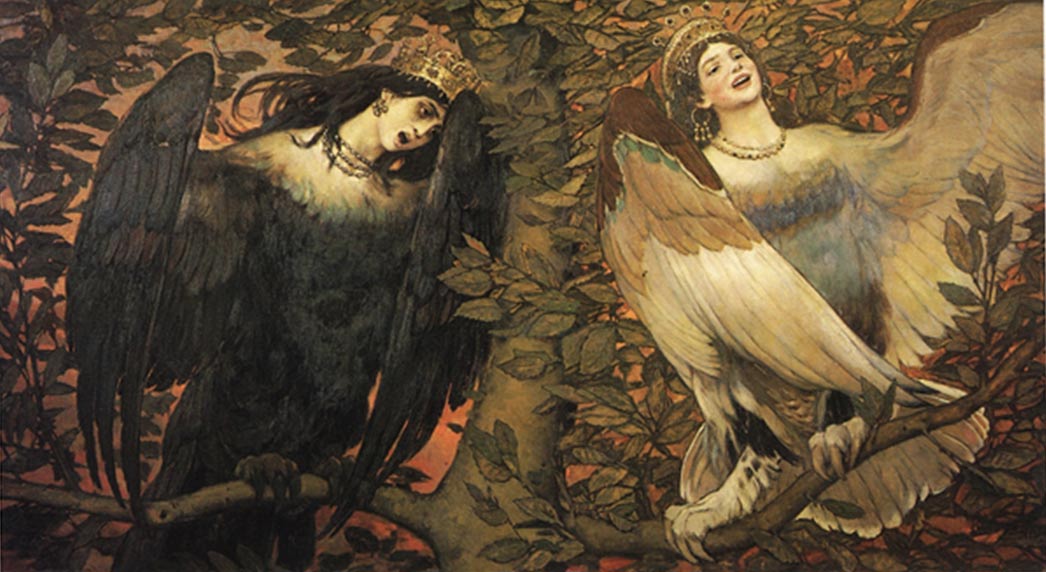
Alkonost and the Gamayun, the mythical beings of Slavic folklore


Viktor Vasnetsov's Sirin (left) and Alkonost (right) Birds of Joy and Sorrow, 1896

Alkonost and the Gamayun, the mythical beings of Slavic folklore

The Alkonost and the Gamayun are mythological creatures with the body of a bird and the head of a beautiful woman. They derive from Slavic and Old Russian folklore, and are described as mythical beings that have the ability to mesmerize humans with their enchanting voices.
References and depictions of Alkonost and Gamayun can be found in Russian chronicles, on 13th century cathedral monuments, and on jewels from the era of Kiev Russia. The Alkonos is typically described as a creature of the dawn while the Gamayun is related with the heavens.

The Alkonost

The Alkonost exudes beauty and docility and, filled with contentment, flies around projecting a sound that is both exquisite and hypnotising.  She enamours those who hear her voice and mentally immobilizes them until they disregard everything in order to hear her delightful melodies.  Her eggs are laid on the sea-shore and then placed in the ocean. According to one version of Slavic folklore, she is able to regulate the weather to her liking; there is a calm before a storm for seven days until the eggs fully hatch.
Alkonost. Russian Lubok of 18–19th Century
Alkonost. Russian Lubok of 18–19th Century (Wikipedia)

Ancient Origins of the Alkonost

It is not known for certain where the myth truly originates from but it is believed that the mythical beings may stem back to Greek Mythology. Alkonost’s name is said to have come from Alcyone, a Greek goddesss, who was transformed into a kingfisher. Similarly, the Alkonost with her spellbinding vocal chords and half woman and half bird form is comparable to Sirens, which she is often depicted with. 
Sirens were dangerous yet beautiful creatures in the form of half-woman and half-fish, although later they took the form of half-woman, half-bird. They lured sailors with their enchanting music and voices, leading them to their deaths.
‘Halcyone’ by Herbert James Draper, 1915.
‘Halcyone’ by Herbert James Draper, 1915. (Wikipedia)
The Siren is essentially associated with sorrow and darkness—records tells us that a Siren would arrive on Apple Spas in the apple orchard full of sorrow but in the afternoon Alkonost emerges to rejoice and laugh. 
She also sang beautiful songs to the saints and foretold future joys, but they charmed humans (especially merchants) with their exquisite voices until they forgot everything related to earth, followed the divine creatures until they died of lethargy and perished in the sea.
Odysseus and the Sirens by Herbert James Draper, c. 1909
Odysseus and the Sirens by Herbert James Draper, c. 1909 (Wikipedia)

The Gamayun

The Gamayun, like the Alkonost, is illustrated as a large bird figure with a woman’s head. Her iconic image represents happiness, prosperity and harmony. She is essentially a messenger for peace and sings beautiful melodies. She is considered to be prophetic in Russia as she is aware of everything that occurs within the world including man and animal, and she knows all amongst the gods and heroes. 
She lives on an island in the East near the Euphrates River or Eden. The Pythoness is not usually depicted with the Alkonost nor Siren, she is permanently alone knowing the secret fate of humans and the world.
Gamayun, in a painting by Viktor Vasnetsov
Gamayun, in a painting by Viktor Vasnetsov (Wikipedia)
Gamayun cooperated with pagan Russian gods, notably Kryshen, Kolyada and Dazhbog, and Veles. She is seen as a personification of Veles—a renowned deity of wisdom, who keeps secrets regarding the world and man’s creation. She is aware of the true nature of all the gods and humans, and sang in the Book of the Vedas.  
The being’s hymns are believed to be divine and to have magical properties, her voice is difficult to understand and decipher, but the few humans who can comprehend her words can have their future prophesied and opulence as a gift. In contrast to the Alkonost, the bird does not derive from ancient Greece but from Iranian mythology, ultimately gaining recognition in Russia.

The bird-maidens in Christianity

Both the Alkonost and the Gamayun played a major role within Old Russian society, including after the introduction of Christianity. When Christianity became the new monotheistic religion in Russia in 988 AD, Russian Pagans resisted. However, many were won over after their sacred gods and beings were incorporated into Christianity in one way or another, including the image of bird-maidens, which were immensely important throughout the society prior to the teachings of Christ. 
Old Russia fundamentally believed in nature and elements such as the sun, rain, wind, animals, and birds with protective signs. The Church took away protective symbols associated with the auspicious birds but allowed the customary depiction of the mythical beings to continue
The Alkonost, for example, is considered to be a personification of God’s will in the Russian Orthodox Church. The church thus used the iconic image of the Alkonost to illustrate the Holy Spirit, in the borders of Christian gospel books from the tenth to the thirteenth centuries. In the port of Korsun’ (Chersones) on the Black Sea and in Kiev, images of the Alkonost appeared on various household goods such as pottery dishes, gold pendants, and kolty. 
She can also be seen on several wood carvings such as The Dmitrovsky Cathedral in Vladimir and the Georgievsky Cathedral in Yurev-Podolsk built in the 13th century, in costume designs, and within the 16th century Lubok prints that sold in markets and fairs. 
Equally, the Gamayun gained significance among the Slavic nations. The large half-bird, half-woman had been depicted on the coat of arms of Russians settlements and in areas such as Smolensk, Mikhailovsk (Sverdlovsk region), Terbuny, and Udmurtia.  Russian mystic Danill Andreev stated that Alkonost and the Gamayun are among the most significant archangels in paradise, in the esoteric Christian-Buddhist cosmography ‘Roza Mira’ written between 1947 to 1957.
 Fundamentally, the divine half-bird, half-women creatures have managed to maintain their popularity in modern Russian due to their associations and adaption, and may continue to play a significant role in Russian folklore in centuries to come.
Featured image: Viktor Vasnetsov's Sirin (left) and Alkonost (right) Birds of Joy and Sorrow, 1896 (Wikipedia).

References

Matthews, John; Caitlín Matthews (2005). The Element Encyclopedia of Magical Creatures. HarperElement.
Koryikova M, Epimakhov A (2007). The Urals and Western Siberia in the Bronze and Iron Ages. Cambridge University Press. UK.
Burham, H (2015). The Esoteric Codex: Deities of Knowledge. Lulu Publishing. US.  
Andreev, D. (1997). The Rose of the World. Lindisfarne Books. USA.
- See more at: http://www.ancient-origins.net/myths-legends/alkonost-and-gamayun-mythical-beings-slavic-folklore-004076?nopaging=1#sthash.R5uOlItp.dpuf

SOURCE ANCIENT ORIGINS


cybershamans (karmapolice) / CC BY-NC-ND 3.0
Share/Bookmark

Sunday, March 6, 2016

Pestera Polovragi, lacasul misterios al lui Zalmoxis. Triunghiul Bermudelor din Oltenia

Romania Megalitica: Comorile Romaniei. Enigme si mistere... la tot pasul! Pestera Polovragi, lacasul misterios al lui Zalmoxis. Triunghiul Bermudelor din Oltenia


cybershamans (karmapolice) / CC BY-NC-ND 3.0
Share/Bookmark

EXTRATERESTRII, intre speculatie si adevar. Urme extraterestre pe Pământ?!? Coincidente stranii, ori probe indubitabile?!?

Romania Megalitica: EXTRATERESTRII, intre speculatie si adevar. Urme extraterestre pe Pământ?!? Coincidente stranii, ori probe indubitabile?!?


cybershamans (karmapolice) / CC BY-NC-ND 3.0
Share/Bookmark

Friday, March 4, 2016

STRANGE UFO OVER BERLIN CAPTURED BY RUSSIAN SOLDIERS 1945


cybershamans (karmapolice) / CC BY-NC-ND 3.0
Share/Bookmark

Strange UFO filmed by Russian helicopter over West Siberia - Jan 2016 !!!


cybershamans (karmapolice) / CC BY-NC-ND 3.0
Share/Bookmark

Thursday, November 26, 2015

Versiunea șocantă a originilor piramidelor egiptene - „The Science”. Pyramids Egypt

Romania Megalitica: Versiunea șocantă a originilor piramidelor egiptene - „The Science”. Pyramids Egypt


cybershamans (karmapolice) / CC BY-NC-ND 3.0
Share/Bookmark

Wednesday, November 4, 2015

ARABIAN GENIES AND A FLYING MOSQUE


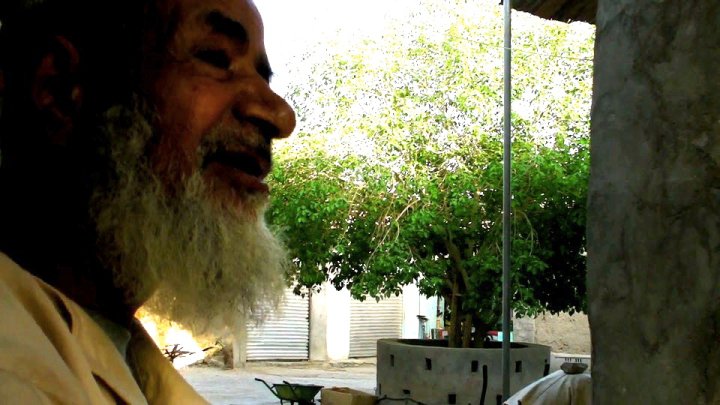
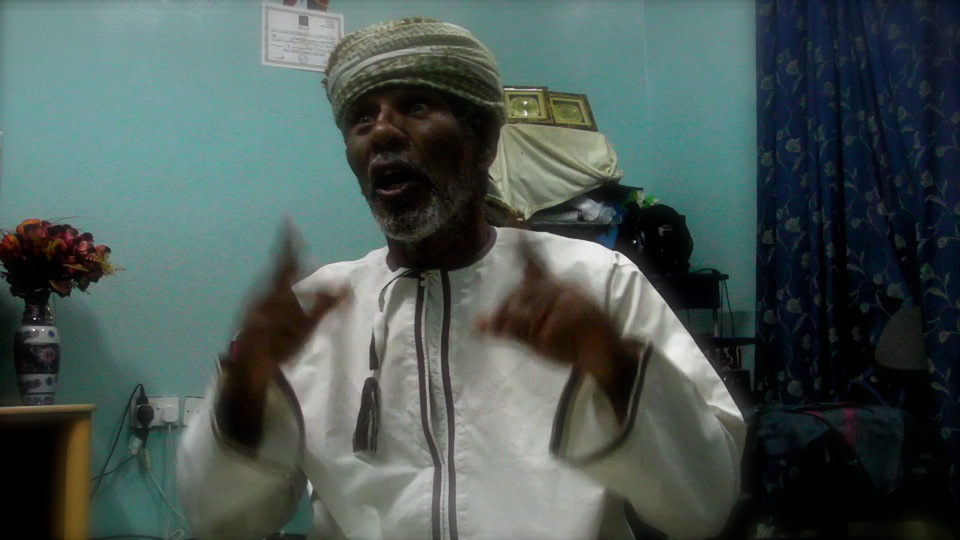
Moalim Salim (All photos by author)
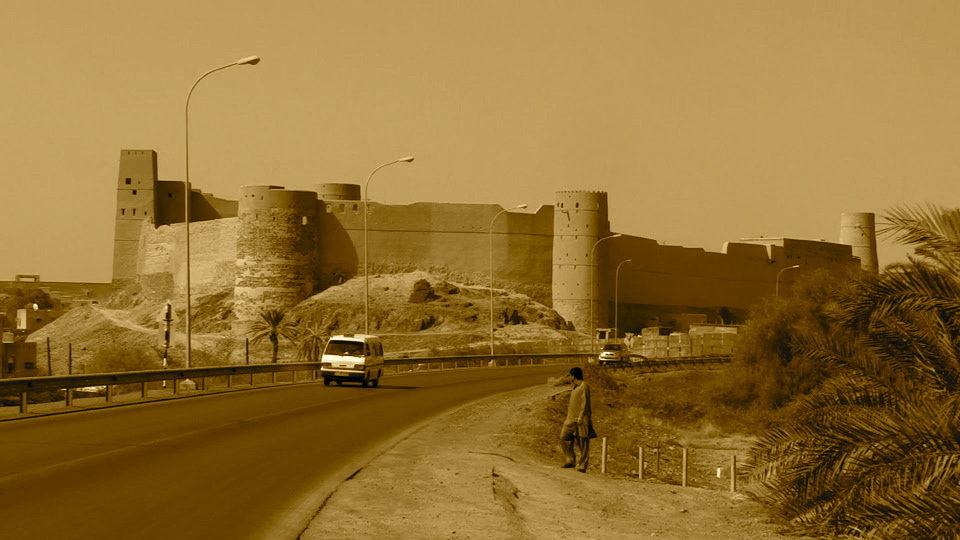
Baxter Jackson takes us on a tour of a sacred Omani fort that is no longer open to the public, to discover the legends within.
WHEN I ASKED my Omani students from Bahla about the legends of genies and sorcery, they squirmed in their seats and very reluctantly shared with me the rumors about those who channel the power of the djinn (genies), the tale of a bewitched tree in the souq, and the legend of the flying mosque.
Living in Nizwa (38 kilometers to the south of Bahla) and loving the paranormal, these stories — of wizards controlling genies for their own nefarious purposes, of a tree more cursed than the Hope Diamond, and of a mosque that appeared miraculously overnight — piqued my curiosity.
I needed to investigate firsthand. The only problem was that Bahla Fort, the epicenter of magic in the Sultanate, hasn’t been open to the public since it was declared a UNESCO World Heritage Site in 1988.
A colleague at the local college where I was teaching English just so happened to have a friend in the Omani Ministry of Culture who was willing to let us into the fort if we agreed to keep it hush-hush. A little bit more digging revealed that the man to talk to about such occult arts was Moalim Salim, a practitioner adept in dispelling djinn who had possessed the living.

Approaching Bahla Fort
In the shadow of the 17th century Jabrin Castle, Moalim Salim welcomed us into his villa (essentially a mini-castle complete with parapets). We removed our shoes at the door and were ushered into the majlis where we folded our legs under us and sat on the carpeted floor.
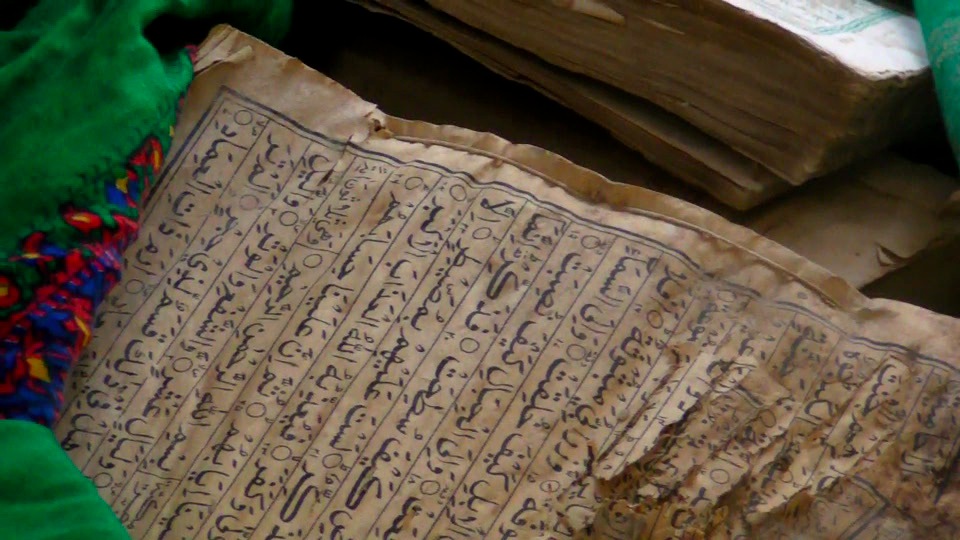
Over tiny cups of cardamon-laced Arabic coffee, he showed us his hajahs andhars, the amulets he uses to exorcise djinn. The first step in an exorcism, he explained, is to cross reference the alignment of the planets and stars at the time he is contacted with the birth sign of the afflicted.
Once that is established, and with the help of his sacred book of Al Ghazali, it’s all a matter of balancing the four elements of earth, wind, air, and fire. “When they’re out of balance on earth, natural disasters occur, and as it is on earth so it is with those Allah made of clay,” he explained.
Moalim Salim has been practicing what he refers to as ‘white magic’ since 1970, after a distinguished military career. He undertook his apprenticeship under the tutelage of Sheikh Said bin Abdulaziz Al Ta’abi, who learned his skill from the book of Al Ghazali, the great book of knowledge whose influence in Islamic thought is eclipsed only by the Prophet Mohammed himself.
The power of the djinn
Moalim Salim claims to have helped over 5,000 people all over the Persian Gulf. Masoud Al Shikely was one, a man from Bahla whose granddaughter fell under the spell of a jini and who had episodes of fits and blackouts (we shifted uneasily as he continued his story). For a period of ten days, Masoud’s family was under siege with spontaneous fires breaking out and nightly showers of stones during which his granddaughter would blackout and convulse.

Old Quran at the Hill of Three Saints
When the burning of frankincense and the salt water baths didn’t work, an exorcism — guided by his own skillful hand and using the combined power of Quranic recitations along with the book of Al Ghazali — was finally able to free the little girl and the family from the djinn’s reign of terror.
We nodded in appreciation of the recounting, took one last sip of cardamom tea, and thanked him for his time. The next stop on our tour of the little village in the Omani hinterlands — the epicenter of all genies — was Bahla Fort.
A wizard haunting
Under the harsh rays of an Arabian sun, the iron door creaked as the gatekeeper opened it to let us into the deserted castle. From behind the milky whiteness of a cataract eye, he guided us to the area of the fortress where the djinn had been most wicked. All archeological attempts at restoration here had been repeatedly frustrated by an unseen force at night: stones erected and mortar plastered during the day would be found undone the next.
1400 years ago, a man was stoned to death by the villagers of Bahla for practicing wizardry.
Legend explains this phenomenon. 1400 years ago, a man was stoned to death by the villagers of Bahla for practicing wizardry. A fort was built on his grave to prevent his followers from turning it into a shrine. His spirit soon began to appear in the labyrinthine back alleyways of the village.
Rumors swirled that the murder victim was teaching others black magic from beyond the grave. Those who die by violence here are said to become djinn and haunt their place of death.
The scourge of the village
Whether the bewitched tree in the heart of Bahla’s old souq took root in the time of the wizard’s murder is unknown. The legend goes that if anyone not from Bahla touched the tree, they would be doomed to great misfortune and an untimely death.

Old man and the magic tree
The tree itself is generally believed to have been a frankincense tree whose sap had been cultivated for millennia and used in religious ceremonies by the likes of King Solomon and Cleopatra.
It is still being used to this day by our local spiritual guide, Moalim Salim, to delve into the realm of the djinn, which the Quran describes as a parallel world of fire without smoke. What stands today in its stead bares little resemblance to the gnarled and twisted monster that spontaneously burst into flame when the locals, believing it to the scourge of the village, cut it down out of fear.
The flying mosque
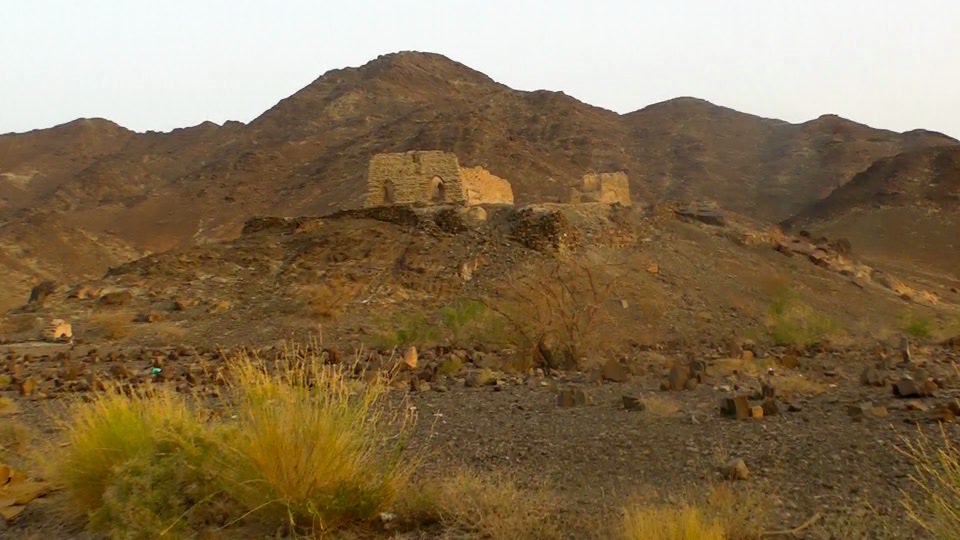
On the other side of the 12 kilometer fortified wall surrounding Bahla is an ancient cemetery of unmarked graves reflecting the austere heritage of Ibadhi Islam. During the Nabahina Dynasty (12th-17th centuries) when Bahla was the capital of Oman, three Sufi mystics took up residence here just outside of the city’s walls to practice their unorthodox sect of Islam, which included saint worship.

Hill of the three saints
These hermits — or saints, as some believed them to be — had tapped into the parallel world of the djinn. It was by this power that the now crumbling remains of the mosque in the middle flew from Rustaq, fully intact.
There from the Hill of the Three Saints, we watched the sun dip behind the jagged outline of the Hajar mountains. Gazing reflectively at the lengthening shadows stretching across the plain of unmarked graves before us, I felt what Carlos Castaneda must have felt after his first meeting with his curandero (spiritual guide), Don Juan, in the deserts of Mexico.
Wondering and wanting to believe in the real possibility of a separate, but seemingly legendary, reality. 
by Baxter Jackson
source matadornetwork

cybershamans (karmapolice) / CC BY-NC-ND 3.0
Share/Bookmark

Saturday, October 24, 2015

ICOANA SPORIREA MINTII

Icoana Sporirea Minții

Articol realizat de Filip Scarlat
Icoana Sporirea MințiiÎn casa fiecărui creştin se găseşte cel puţin o icoană a Maicii Domnului, ea având, cu siguranţă, cele mai multe reprezentări din iconografia ortodoxă. Cele mai multe dintre acestea au o istorie interesantă, de multe ori neştiută de credincioşii care le posedă. 
Despre icoana „Sporirea minţii” nu ştiam foarte multe, de fapt, nu ştiam nimic. Am aflat că ea este considerată ajutătoare a copiilor, dătătoare a harului înţelepciunii şi vindecătoare a slăbiciunii minţii. M-am gândit că poate am zărit-o, cândva, dar mintea mea nu a reţinut denumirea ei, aşa că am căutat rapid pe internet această reprezentare a Fecioarei Maria cu pruncul.
Maica Domnului este reprezentată împreună cu pruncul Iisus, în picioare, înfăşuraţi până la umeri într-o mantie, frumos ornamentată. Capetele lor sunt acoperite cu coroane de aur, iar deasupra sunt zugrăviţi trei heruvimi şi un alt heruvim, cu aripile larg deschise, este reprezentat sub picioarele lor. În spatele lor se află poarta raiului, iar în partea de jos a icoanei este reprezentată imaginea Ierusalimului ceresc. Pe părţile laterale sunt reprezentaţi îngeri stând în picioare sau îngenuncheaţi pe nori, având în mâini câte o lumânare aprinsă.
 La origine, ea este o icoană rusă mai rară care se păstrează astăzi în Biserica Acoperământul Maicii Domnului din Romanov-Borisoglebsk, astăzi oraşul Tutaev. Originile ei se pare că datează din secolul al XVII-lea, din timpul patriarhului Nikon, atunci când a avut loc răscoala rascolnicilor provocată de neînţelegerile cauzate de revizuirea cărţilor de cult şi a practicilor religioase din Rusia. 
Din cauza acestor tulburări, un om evlavios, care era şi iconograf, frământat de situaţia îngrijorătoare din ţara sa, neştiind cum să procedeze în această situaţie, a ajuns aproape să-şi piardă minţile, moment în care s-a rugat cu putere Maicii Domnului ca să primească ajutor. Aceasta i s-ar fi arătat, cerându-i să picteze o icoană cu chipul ei, iar din istorisirea protoiereului Vladimir Miroslavski, cel care relatează întâmplarea, pictorul nu a reţinut destul de bine imaginea Maicii Domnului şi s-a rugat către aceasta de mai multe ori, ca să–i lumineze mintea şi astfel să încheie lucrarea. 
Alte reprezentări ale icoanei s-au mai descoperit în Catedrala Schimbării la Faţă din oraşul Ribinsk, gubernia Iaroslavului, dar se pare că această versiune s-a pierdut şi în Biserica Maicii Domului din Tihvni în secolul al XVIII-lea.
Tradus din limba rusă, acatistul consacrat icoanei Maicii Domnului „Sporirea minţii” subliniază importanţa acesteia astfel : „icoana Maicii Domnului îi luminează cu lumina cunoştinţei dumnezeieşti pe cei aflaţi în întunericul neştiinţei, limpezeşte mintea cea întunecată de păcate”. 

Dar în acatist întâlnim şi referirea la oraşul Loreto unde s-ar afla o reprezentare asemănătoare a Maicii Domnului şi precizarea că aici s-ar afla casa Maicii Domnului. Astfel, pe lângă originea ei rusească, apare şi posibilitatea ca ea să fie legată de lumea catolică. Nu ştiam nimic despre acest oraş sau despre o casă a Maicii Domnului, aşa că am pornit în căutarea altor informaţii. 

Oraşul Loreto din provincia Ancona, din Italia, este recunoscut ca un important loc de pelerinaj din lumea catolică. Aici s-ar afla o statuie a Fecioarei Maria care este numită “Fecioara neagră”, aflată într-o biserică numită a “Sfintei Case” din Nazaret. O primă istorisire catolică ne spune că autorul statuii din cedru ar fi evanghelistul Luca şi că ea s-ar fi păstrat într-o casă din Nazaret care ar fi fost strămutată în Loreto de către îngeri, în secolul al XII-lea, atunci când turcii au început să cucerească teritorii în Orient. 

Ţinând cont că în secolul al XII-lea au avut loc numeroase cruciade, fiind aduse în Italia şi în Europa de Vest multe relicve din Ţara Sfântă, pare mai plauzibilă ipoteza că aceste obiecte sfinte să fie aduse de cruciaţi în Italia. Casa nu ar fi fost strămutată de îngeri, ci pietrele ar fi făcut parte din zestrea fiicei lui Nichifor Anghelos al Epirului la căsătoria acesteia cu fiul regelui de Napoli. Statuia ar fi fost admirată de ambasadorii ruşi ai marelui duce Vasilii al III-lea în anul 1528, de aici pornind ideea cum că ea ar consitui prototipul pentru viitoarea reprezentare realizată în Rusia. 

În prezent vechea statuie nu mai există deoarece a fost distrusă într-un incendiu din anul 1921, ea fiind înlocuită cu una asemănătoare. Aflându-ne la început de an universitar am considerat că este necesar să spun câteva cuvinte si despre o altă reprezenare a Maicii Domnului, care pare să fie strâns legată de prima. Icoana “Maria-Tronul înţelepciunii”, a fost pictată de Ivan Rupnik la îndemnul papei Ioan Paul al II-lea pentru anul jubiliar 2000. 

Ea este dedicată lumii universitare, pentru a-i ajuta pe studenţii din învăţământul superior să ajungă la adevărata înţelepciune. Icoana a circulat pe toate continentele, iar în data de 30 noiembrie 2013, papa Francisc I a dăruit icoana studenţilor francezi. Pe durata unui an icoana a ajuns şi va ajunge în mai multe centre universitare din Franţa, unde vor avea loc mai multe manifestări religioase. 

Primind această icoană, lumea universitară este invitată să se roage şi să mediteze avându-o pe Fecioara Maria ca model al înţelepciunii umane şi Mamă a înţelepciunii divine care este Hristos.

SURSA


cybershamans (karmapolice) / CC BY-NC-ND 3.0
Share/Bookmark

Sunday, August 16, 2015

Admiral Richard E Byrd - Hollow Earth Video Interview

Thursday, July 23, 2015

MISTERELE CAPELEI ROSSLYN

Capela Rosslyn

Istorie sau mitologie? Aflata la cateva mile dinstanta de Edinburgh, initial cunoscuta drept capela Sfantului Matei, capela Rosslyn ascunde multe secrete...
Pentru pasionatii de mistere si chiar pentru orice turist curios, capela a devenit in ultimii ani, o veritabila Mecca.

Constructia a fost ridicata de printul de Orkney, Sir William St Clair (dupa unii Sinclair), in 1446. De fapt, ea constituia doar o parte dintr-un vast ansamblu religios, proiectat a avea, in final, forma unei cruci, ansamblu care nu a fost insa niciodata finalizat. Printul de Orkney a murit in 1484, fiind inhumat in interiorul capelei iar urmasii sai nu au mai vrut sa continue lucrarea, care deja aproape ii secatuise financiar.

Reforma brutala impusa de Henric al VIII-lea a dus la distrugerea altarului capelei, in 1592 si de atunci pana prin secolul 18, cladirea a ramas in parasire, ruinandu-se treptat. Trupele lui Oliver Cromwell au folosit-o drept grajd dar s-au ferit sa o distruga, asa cum au facut cu alte edificii catolice. Abia in 1736, un urmas al clanului St Clair, James, va face unele reparatii, refacand complet acoperisul capelei. Un secol mai tarziu, arhitectul David Bryce va intreprinde reparatii capitale, la comanda lui James Alexander, al treilea conte de Rosslyn.

Capela a fost descrisa, pe drept cuvant, drept „o tapiserie in piatra”, fiind una dintre cele mai impresionante constructii din piatra ale Europei, faimosul „stalp al ucenicului” reprezentand o capodopera a sculpturii medievale. Invaluit intr-un total mister pentru profanii, pentru orice initiat transmite un mesaj cat se poate de clar...
Legenda acestuia este interesanta …se spune ca mesterul, nestiind cum sa-l sculpteze, a plecat la Roma, sa caute inspiratie in bisericile de acolo. 

La intoarcere, insa, a gasit stalpul minunat impodobit, de catre un ucenic de-al sau. Invidia i-a luat atunci mintile batranului mester, care l-a lovit cu ciocanul in cap pe ucenic, cu atata putere incat i l-a zdrobit! Altii sustin ca ar fi fost de fapt un sacrificiu voit al tanarului ucenic, pentru a asigura astfel durabilitatea constructiei – ideea este adesea intalnita in folclorul medieval, vezi legenda Mesterului Manole. Indiferent de ce s-a intamplat insa, cert este ca asasinatul produs l-a determinat pe episcopul de St Andrew sa ceara Papei amanarea consacrarii capelei. 

Una dintre sculpturile din capela infatiseaza chiar scena uciderii ucenicului, care apare sub forma unui tanar cu fruntea brazdata de o taietura adanca.

Este evident faptul ca printul de Orkney a avut legatura cu ordinul Templierilor, chiar daca acesta fusese desfiintat, oficial, in urma cu mai bine de un secol si jumatate. Nu e intamplator, din acest punct de vedere, ca peste cateva veacuri, William Sinclair de Rosslyn, un stranepot al printului, a devenit primul Mare Maestru al Lojei Scotiene. 

Este insa oare capela locul unde ar fi fost ascuns Sfantul Graal, cea mai de pret relicva a crestinatatii?
Cavoul in care se afla ramasitele pamantesti ale celor din clanul Sinclair ar putea oferi un raspuns la aceasta intrebare, dar el nu a mai fost deschis de cateva secole. Sub bisericuta, arheologii si istoricii au descoperit, cu ajutorul tehnologiei cu ultrasunete, o sala boltita care nu are nici o intrare.

 Nu au sapat in podeaua capelei, pentru ca le-a fost interzis, motiv pentru care s-au intensificat speculatiile ca aici ar fi ascuns nu numai Sfantul Graal, ci si Chivotul Legii (pe care Moise i l-a daruit lui Aaron) sau chiar capul Sfantului Ioan Botezatorul.

Enigmele nu se opresc aici, caci capela, o reprezentare simbolica a templului lui Solomon din Ierusalim, pare sa ofere indicii despre un contact cu Lumea Noua inainte ca genovezul Columb sa fi ajuns acolo (pe unele sculpturi apar cactusi si stiuleti de porumb, plante necunoscute pe atunci europenilor).

Robert Lomas si Christopher Knight, cei doi autori ai best-seller-ului „Secretul lui Hiram”, sustin ca zidul de apus al capelei de la Rosslyn ar fi de fapt o copie a Zidului Plangerii de la Ierusalim. Una dintre inscriptii atrage atentia: Forte est vinum fortior est rex fortiores sunt mulieres super omnia vincit veritas (Vinul e puternic, regele e mai puternic, femeile sunt si mai puternice, dar adevarul ii biruieste pe toti).

Timp de sute de ani, atat expertii cat si simplii vizitatori au incercat sa rezolve enigma sculpturilor din interiorul capelei. In timp ce unii sunt de parere ca acestea ascund indrumari catre o comoara ascunsa, compozitorul Stuart Mitchell sustine ca a rezolvat o parte dintre aceste enigme. El crede ca tavanele ornate cu arcuri sculptate reprezinta de fapt un cod al unei muzici medievale.

 Tatal sau, Thomas Mitchell, si-a petrecut 20 de ani incercand sa rezolve codul acestor ornamente si acum, Stuart, interpretand descoperirile tatalui sau, a obtinut o partitura, intitulata "The Rosslyn Motet". Cei doi spera ca muzica, atunci cand este interpretata la instrumente medievale va rezona si va dezvalui secretul din piatra.

"Simbolismul din capela Rosslyn vorbeste despre o civilizatie pierduta pentru noi, civilizatie care se pare ca detinea radacini ale tuturor mecanismelor Universului" a declarat Mitchell.

Muzica in sine, potrivit autorului, este un amestec de "melodii celtice plus imnuri antice si un soi de muzica crestina ". Cei doi sunt de parere ca acele note nu au fost sapate in piatra numai pentru a inregistra o piesa muzicala, ci ca acestea pot dezvalui un secret medieval. Exista evident si voci care ii contrazic pe cei doi, cum ar fi directorul Edinbrgh Symphonia, care crede ca este "doar o farsa dusa la extrem, cei doi dorind sa o ia pe urmele lui Dan Brown".

Pe langa cei care considera ca edificiul de la Rosslyn ar reprezenta un mesaj cifrat, sculptat in piatra, exista si sceptici, ce nu vad pe peretii capelei cavaleri eretici si secrete stravechi, ci o marturie asupra geniului la care ajunsesera mesterii zidari ai evului mediu.

Romanele lui Dan Brown sunt considerate a fi nu doar cele mai vandute, dar si cele mai influente carti ale ultimilor ani. Ingredientele lor - crime, mistere, profetii, indicii enigmatice, au adus in atentia cititorilor de pretutindeni o problematica de care odinioara se interesau doar savantii: secretele cavalerilor templieri.
http://www.tjmitchell.com/

SURSA TEMPLULMASONIC

cybershamans (karmapolice) / CC BY-NC-ND 3.0
Share/Bookmark

Related Posts Plugin for WordPress, Blogger...

Share

Twitter Delicious Facebook Digg Stumbleupon Favorites